Lyon changes when you start in Croix-Rousse. I love the way Quentin stitches together silk-worker history and the daily reality of Lyon—market smells, courtyard corners, and the city’s visual clues that you’d miss on your own. I also love the secret pathways angle, because those little shortcuts make the whole neighborhood feel understandable fast.
One thing to keep in mind: this is a walking tour on hills and older streets, so it isn’t set up for people with mobility impairments or wheelchair users. If you’re the type who hates steep climbs or uneven ground, you’ll want to think twice.
Quentin’s style is what makes the tour land. He brings humor, quick stories, and practical suggestions so you leave with places to return to—not just dates to remember.
In This Review
- Key things to know before you go
- Why Croix-Rousse changes how you see Lyon
- Mur des Canuts and La Maison des Canuts: the silk story starts fast
- Croix-Rousse street market: local products and real neighborhood life
- The secret passageways (traboules) and Cour des Voraces
- From hilltop clues to Roman Lugdunum and the fall of an empire
- Street art in Lyon: how modern creativity fits the old streets
- Place des Terreaux: the wrap-up viewpoint and your next steps
- Practicalities: timing, shoes, weather, and finding the group
- Price and value: why it’s so cheap and still worth your time
- Who should book this walk (and who might skip it)
- FAQ
- How long is the Lyon Croix-Rousse walking tour?
- Where does the tour start?
- How do I find the guide?
- Is the tour in English?
- What should I bring?
- Is transportation included?
- Will the tour run if it rains?
- How much does it cost, and do I tip?
- Is the tour suitable for wheelchair users or people with mobility impairments?
- What will we see during the walk?
- Should you book this tour?
Key things to know before you go
- Mur des Canuts is your landmark start: meet at 36 Bd des Canuts right by the famous mural.
- Silk heritage is the backbone: you’ll tour sites tied to Croix-Rousse’s silk economy.
- Traboules and Cour des Voraces: expect secret passageways and courtyards, not just open streets.
- You’ll connect eras: silk workers, Roman-era Lyon, and even WW2 and worker revolts show up in the storytelling.
- English and tip-friendly: the guide is paid by tips, and you can give what you think it’s worth.
- Weather-proof basics: umbrellas come along, so light rain isn’t a dealbreaker.
Why Croix-Rousse changes how you see Lyon
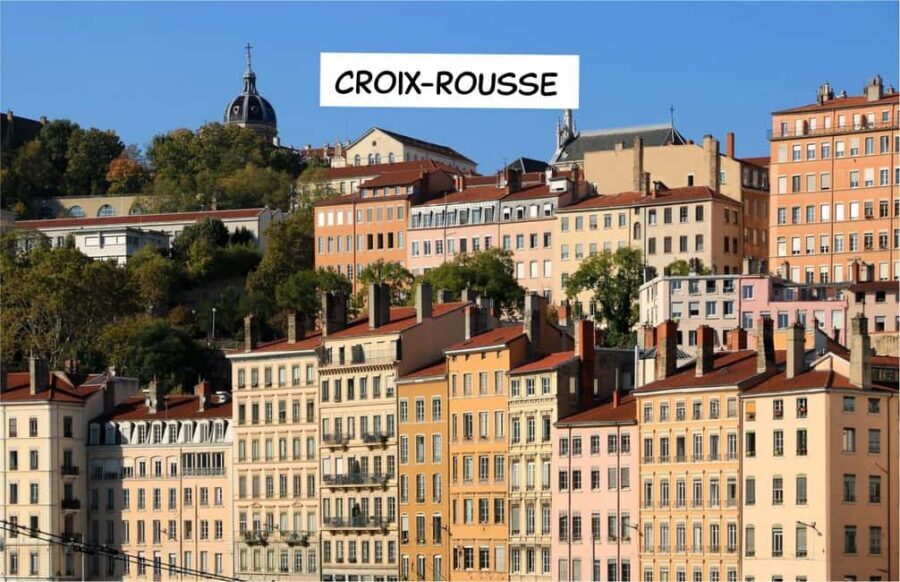
Croix-Rousse sits up on a hill, and that elevation shapes everything. From the start, you’ll feel the neighborhood’s rhythm: stairs, viewpoints, and tight streets that make the stories feel close rather than textbook.
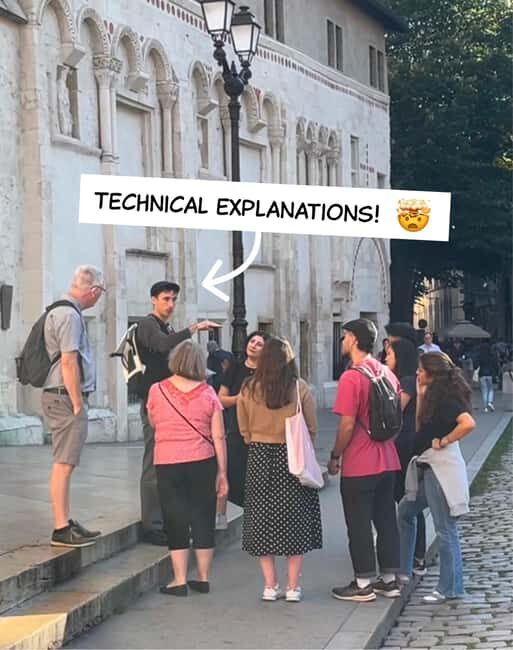
This is one of those Lyon walks where you learn by moving. You’re not stuck listening in one place. You hear how Lyon worked—who made the textiles, how people moved fabric, and how neighborhoods grew around production. When you later look at Lyon from a distance, you’ll understand what those layers mean.
Other Lyon highlights and sightseeing tours in Lyon



Mur des Canuts and La Maison des Canuts: the silk story starts fast
The tour kicks off right in front of the Mur des Canuts mural at 36 Bd des Canuts (69004). It’s the kind of meeting point that helps even if you’re arriving without a perfect sense of direction—because the mural is hard to miss.
From there, you spend time at Mur des Canuts and then move to La Maison des Canuts for a guided look. The big idea here is that Croix-Rousse wasn’t just a pretty hillside. It was a working world tied to the silk trade, with people whose lives revolved around fabrics, workshops, and transport routes.
I like that the guide doesn’t treat silk as a distant industry. Instead, you get a sense of the workers’ reality—how their skills shaped Lyon, and how their collective actions could become dramatic. The point isn’t just what silk was, but who made it possible.
Croix-Rousse street market: local products and real neighborhood life
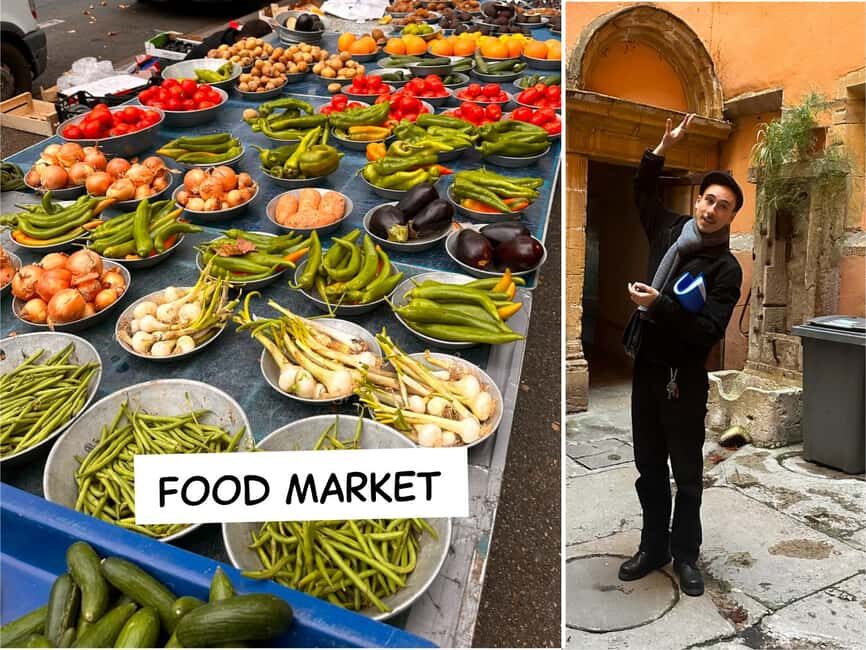
Croix-Rousse isn’t only history. One stop leans into everyday Lyon with the Croix-Rousse street market. It’s a short guided segment, but it helps reset your brain from monuments to people.
Here’s what I find useful: markets are where you see what a city values right now. Even if you don’t buy anything, you’ll likely notice the variety of local products and the way vendors and shoppers move together. It makes later parts of the walk feel more grounded, because you’re seeing a community, not just a backdrop.
If you’re planning photos, this is a good moment to take a breath and shoot things that are truly Lyon—faces, displays, textures—before the tour starts threading you through tighter passageways.
The secret passageways (traboules) and Cour des Voraces
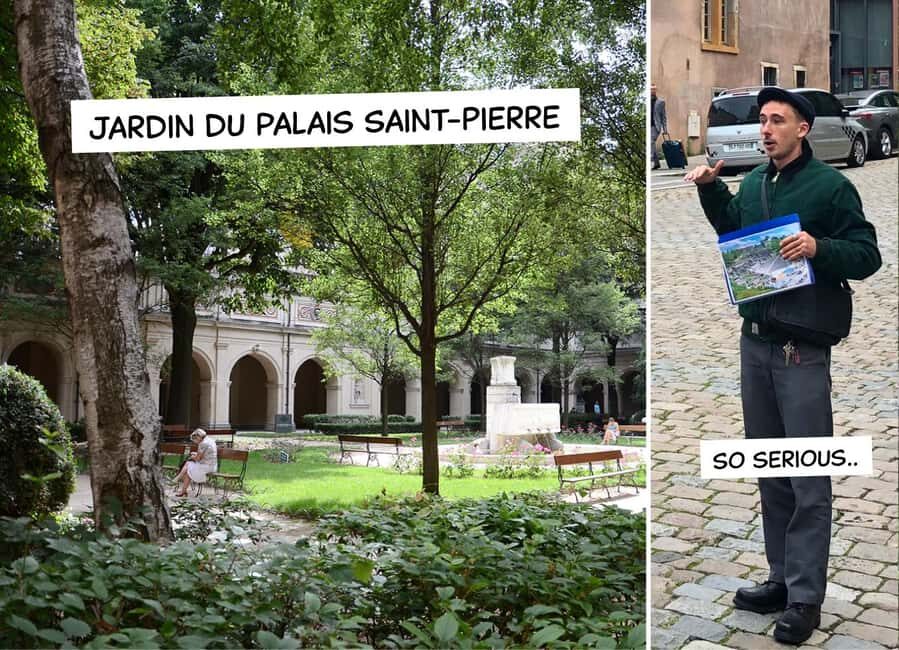
This is the part that always feels like a bonus even when you know it’s coming. The tour includes time for traboules—those passageways used historically to move goods—and it specifically references Cour des Voraces.
What’s great for you as a visitor is the practical payoff. When you walk through a secret route, you stop thinking of it as a curiosity and start understanding why it mattered: speed, access, and the ability to connect workspaces in dense neighborhoods.
Also, these courtyards tend to give you mini-views and photo angles that normal streets don’t. You’ll likely find yourself slowing down, looking up, and realizing how much Lyon hides behind ordinary doors.
From hilltop clues to Roman Lugdunum and the fall of an empire
Lyon didn’t begin with silk. That’s why I like that the tour also touches Roman-era Lugdunum—and even the fall of that key city in the Roman Empire.
You get this through guiding conversation and walking context, not through a museum-only approach. The walk keeps reminding you that Lyon is layered: different powers and economies took turns reshaping the city, and each era leaves traces.
One of the most specific highlights here is the Amphitheater of the Three Gauls. You’ll walk to it, take it in, and likely start mapping what you’re seeing onto what you just heard. Even if you’re not a hardcore Roman-history person, the structure and scale give you something tangible.





Street art in Lyon: how modern creativity fits the old streets
Not every “hidden stories” tour stays in the past. This one includes a stop dedicated to the hidden Street Art of Lyon.
For me, street art is a way to read the city today. It shows what locals want to say, what they preserve, and what they remix. In a neighborhood like Croix-Rousse—formed by workers, production, and political energy—that makes sense.
You’ll get guided context, then you get to actually look. The best part is that you’re not just hunting for graffiti like a scavenger game. You’re learning how to interpret what you see in the setting you’re standing in.
Place des Terreaux: the wrap-up viewpoint and your next steps
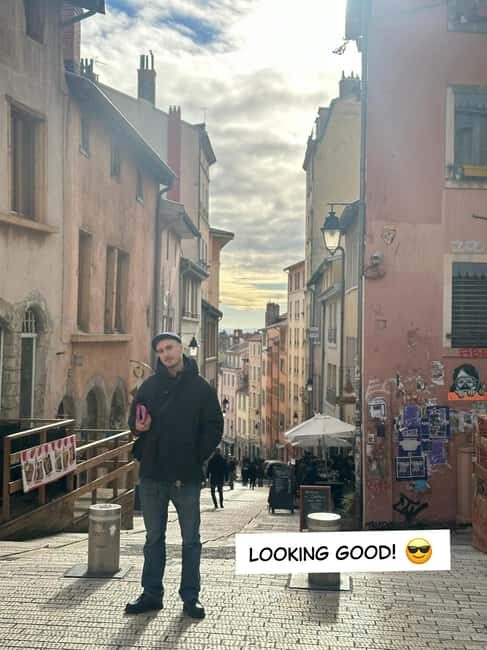
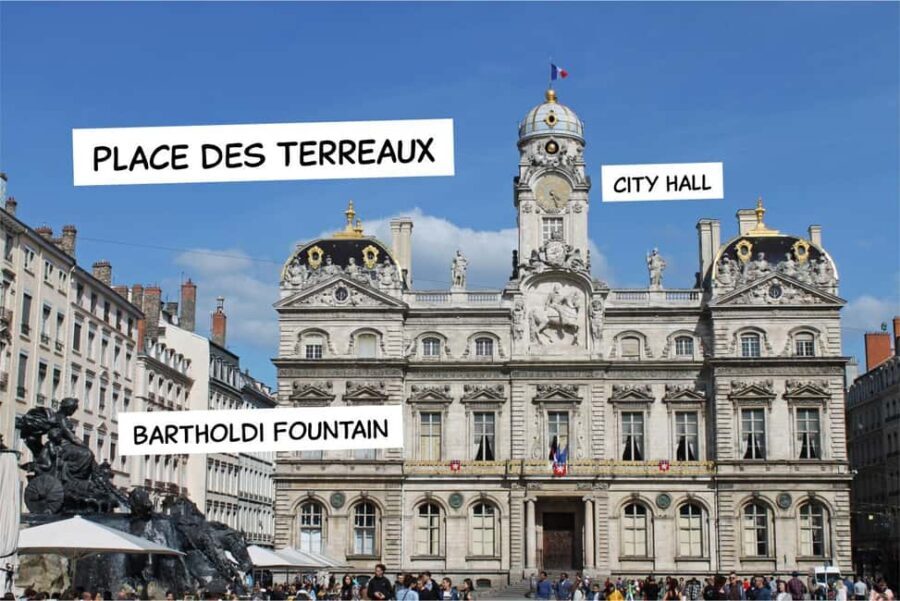
The tour ends back at Place des Terreaux, with a final stretch that includes photo time and guided explanation. This is a strong finish because Place des Terreaux is the kind of Lyon square where you can keep going after your tour ends.
Quentin also shares personal recommendations to enhance your stay in Lyon. That’s not fluff. It’s one of the most valuable parts of booking a live guide: you get suggestions that fit the story you just heard and the neighborhood you just walked.
And since you’re ending where you can branch out, you’re not stuck playing transit chess immediately after. You can keep exploring at your own pace.
Practicalities: timing, shoes, weather, and finding the group
The tour runs about 105 minutes. That’s a sweet spot: long enough to feel like a real experience, short enough that you can still plan dinner or another neighborhood walk the same day.
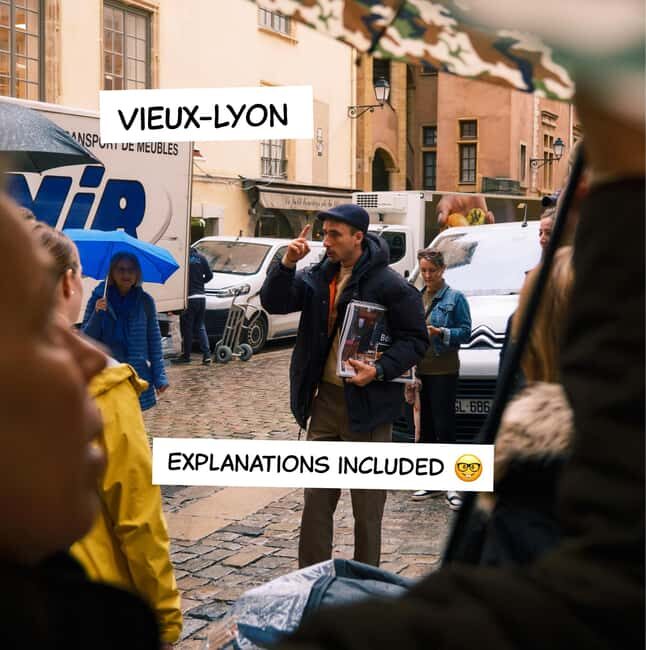
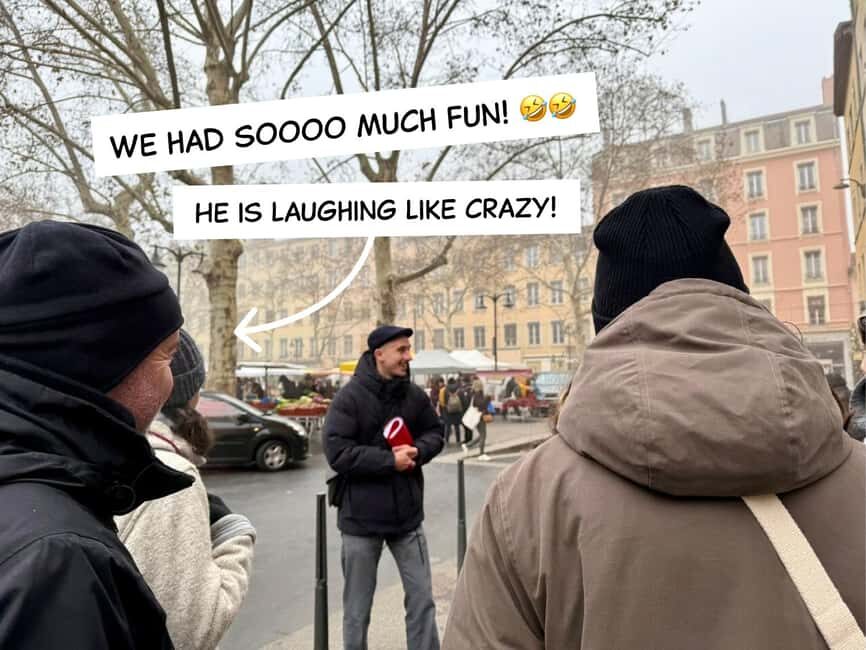
You start at 36 Bd des Canuts, and meeting is directly in front of the Mur des Canuts mural. Quentin is easy to spot: beret on his head, red notebook in hand. If you don’t see him right away, don’t panic—check the mural area, not the street numbers alone. The landmark matters.
On getting there, I strongly recommend the subway approach mentioned for this route: take the C Line toward Cuire and hop off at Hénon station. Croix-Rousse sits on a hill, and walking up can take longer than you expect. The good news is you’ll walk down from the station area, which feels easier than climbing.
What to bring is straightforward:
- comfortable shoes
- an umbrella (the guide brings some too)
- camera
- water
This tour isn’t included with meals, so plan a snack or drink before or after if you know you get hungry.
Price and value: why it’s so cheap and still worth your time
The posted price is $4.43 per person, but the real financial model here is tip-based. The guide is paid by tips, and you can give what you think it was worth.
So how do you judge value? You’re getting a guided walk with multiple themed beats:
- Croix-Rousse silk heritage sites
- a market stop
- traboules and Cour des Voraces passageways
- Roman-era Lugdunum context and the Amphitheater of the Three Gauls
- hidden Street Art time
- personal recommendations for what to do next
For a city like Lyon, the value is in the connections. Knowing the silk trade and seeing the work routes makes your later self-guided wandering smarter. Same with Street Art—context helps you look better.
If you enjoy practical storytelling and photo-worthy detours, you’ll feel like you got more than your money’s worth. If you only want one famous viewpoint photo and nothing else, you might not feel the same payoff.
Who should book this walk (and who might skip it)
This tour fits best if you like city stories that connect to real places. If you enjoy:
- worker-focused history (silk, revolts, dramatic moments)
- hidden architecture (traboules and courtyards)
- street-level photography
- a guide who mixes facts with humor
…then you’ll probably have a great time.
It’s not suitable for people with mobility impairments or wheelchair users, and the hill and older streets can be tough even with good intentions. Also, bring the right shoes because you’re walking, not sightseeing from a bench.
Should you book it on a tight schedule? Yes—105 minutes is manageable. Should you stack it with another major museum? Maybe not on the same hour unless you’re confident with your stamina.
FAQ
How long is the Lyon Croix-Rousse walking tour?
It lasts about 105 minutes. Starting times can vary, so it’s best to check what’s available when you book.
Where does the tour start?
You meet at 36 Boulevard des Canuts, 69004 Lyon, directly in front of the Mur des Canuts mural.
How do I find the guide?
The guide wears a beret and holds a red notebook, and will be by the Mur des Canuts mural at the meeting point.
Is the tour in English?
Yes. The live guide provides the tour in English.
What should I bring?
Bring comfortable shoes, an umbrella, a camera, and water.
Is transportation included?
No. Transportation to and from the starting point is not included.
Will the tour run if it rains?
Yes. The tour will still go ahead in rain, and the guide brings umbrellas.
How much does it cost, and do I tip?
The price is listed at $4.43 per person. The guide is paid by tips, and you’re free to tip what you think it’s worth.
Is the tour suitable for wheelchair users or people with mobility impairments?
No. It’s not suitable for wheelchair users and people with mobility impairments.
What will we see during the walk?
You’ll cover Croix-Rousse landmarks and stories including Mur des Canuts, La Maison des Canuts, the Croix-Rousse street market, traboules such as Cour des Voraces, Street Art of Lyon, the Amphitheater of the Three Gauls, and the finish at Place des Terreaux.
Should you book this tour?
Yes, if you want a guided Croix-Rousse experience that explains why the neighborhood looks the way it does. I’d book it for Quentin’s mix of silk trade stories, worker history, and the hands-on feeling you get from traboules and courtyards. It’s a fun, lively walk that also leaves you with practical ideas for what to do after.
Skip it only if your mobility is limited or you want a purely effortless sightseeing route with minimal walking. If you can handle a hill and older streets, this is one of the most efficient ways to understand Lyon’s layers in about 1 hour 45 minutes.