REVIEW · LYON
Vieux Lyon Cultural & Historical Walking Guided Tour (English)
Book on Viator →Operated by Free Tour Lyon · Bookable on Viator
Two hours in Lyon, and the city talks back. I love how this walk mixes traboules with silk and food stories, and I love that guide Paul makes centuries feel like street-level reality, from the Middle Ages to WWII.
One heads-up: there’s no audio system, so if you’re toward the back (or the group bunches up), it can be harder to catch every detail.
In This Review
- Key highlights to look for
- Starting at Place Saint-Jean, ending inside Hôtel-Dieu
- Why this Lyon walk feels like a good deal
- Cathedrale Saint-Jean-Baptiste: the astronomical clock stop
- Traboules du Vieux Lyon: secret passages you can actually walk
- Tour Rose and Maison du Crible: La Tour Rose as a checkpoint
- Brochier Soieries: live silkworms and the jacquard link
- Theatre des Célestins: façade, square, and art tucked underneath
- Courthouses and the trial of Klaus Barbie
- Shopping street + Hôtel-Dieu: from old hospital to modern food and luxury
- What Paul’s style does for your whole trip
- Timing, pacing, and how to set yourself up for photos
- Who should book this Vieux Lyon walking tour
- Should you book? My take on the decision
- FAQ
- How long is the Vieux Lyon Cultural & Historical walking tour?
- What does it cost?
- Is the tour in English?
- Where does the tour start and end?
- What’s included in the price?
- Is pick-up included?
- Are there any entry tickets I need to buy separately?
- Is there free cancellation?
Key highlights to look for
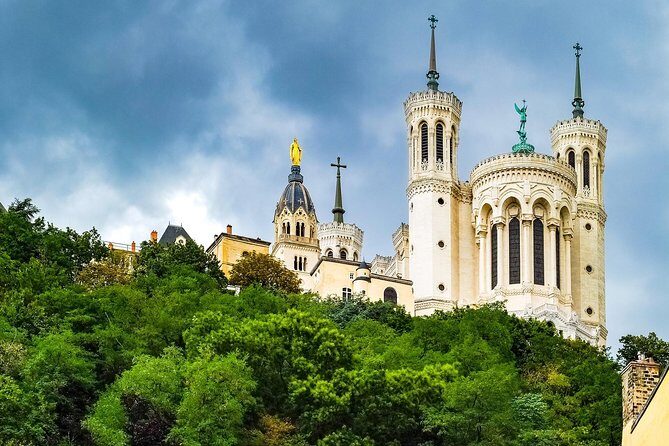
- Paul’s storytelling: funny, clear, and packed with context so you remember what you saw
- Traboules you can walk: hidden passageways in Vieux Lyon, not just a vague description
- Silk-making in season: you may see live silkworms and a jacquard-loom model at Brochier Soieries
- World War II reminders: the Lyon court building ties directly to the trial of Klaus Barbie
- Hôtel-Dieu at the end: an old hospital now used for shopping, a luxury hotel, and places to eat
Starting at Place Saint-Jean, ending inside Hôtel-Dieu
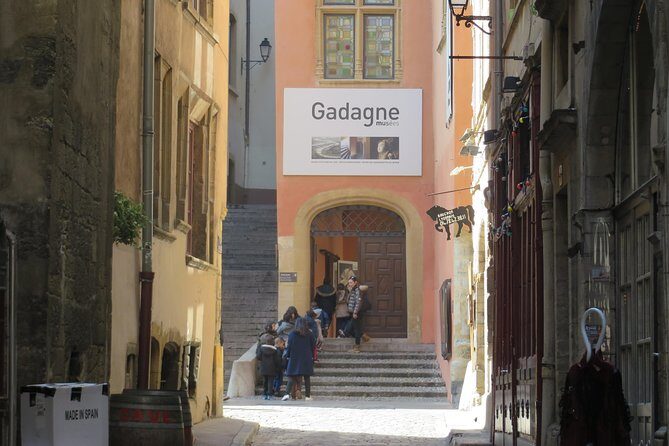
This tour starts at Place Saint-Jean at 10:00 am, in the heart of Vieux Lyon. The walk ends at Place de l’Hôpital, and the finale is inside Hôtel-Dieu, which helps you avoid the end-of-tour scramble. You’ll spend about 2 hours moving at a relaxed pace, with quick stops that still manage to cover a lot of ground.
Logistics are simple: you get a mobile ticket, and the tour runs in English. It’s also capped at a small group size (listed as 18), which usually means you can hear the guide and keep up without feeling like you’re stuck in a long line.
The walk itself is easy to plan around because you’re not trapped all day. If you do this early, you’ll come out with a mental map of where things are, and you’ll know what to chase next on your own.
Other Lyon walking tours with a local guide in Lyon



Why this Lyon walk feels like a good deal

The price is about $6.05 per person, and what matters most is that entry fees are included. That changes the value equation, because you’re not paying extra at every stop for tickets you didn’t expect to buy.
This tour also includes the “real tour” things people want from a guided walk: you get context. You’re not just seeing buildings; you’re learning why Lyon built itself the way it did—trade, silk, food culture, and the way the city adapted during hard times.
There’s another practical angle: Paul doesn’t leave you hanging at the end. In the reviews, people repeatedly mention that he gives pointed suggestions for coffee, meals, and museums after the tour. That kind of advice is hard to quantify until you’re actually hungry and trying to find the right place fast.
Cathedrale Saint-Jean-Baptiste: the astronomical clock stop
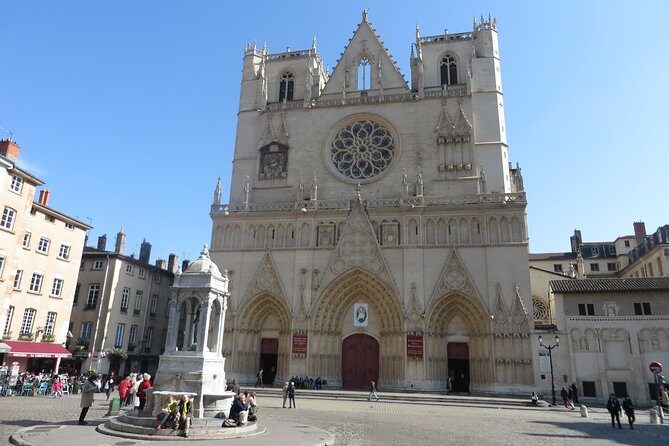
You begin with Cathedrale Saint-Jean-Baptiste de Lyon for a short, efficient look—around 15 minutes. This stop is mostly about orientation and a quick visual payoff: you see the cathedral setting and get a sense of the building’s long importance to Lyon.
The big draw here is the astronomical clock. Even if you’re not a clock-nerd, it gives you a tangible example of how Lyon mixed science, art, and civic pride. In a small time window, this stop works because it sets the tone for the rest of the walk: layered history right in front of you.
One thing to consider: cathedral access can depend on the day and opening hours. There was at least one experience where entry didn’t match what people hoped for, so don’t treat this as a guarantee that you’ll be inside the full way every single time. Still, the stop is designed as a quick introduction rather than a long cathedral tour.
Traboules du Vieux Lyon: secret passages you can actually walk
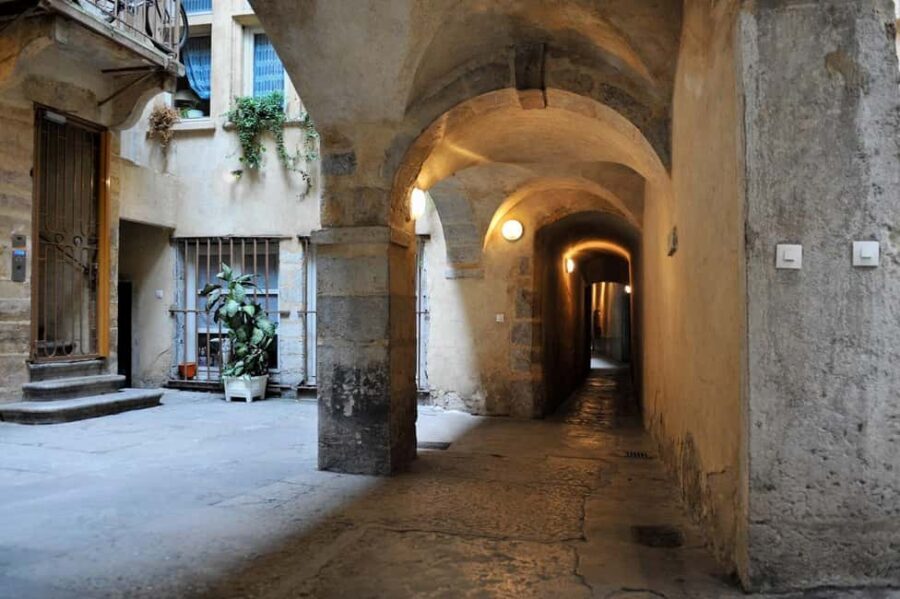
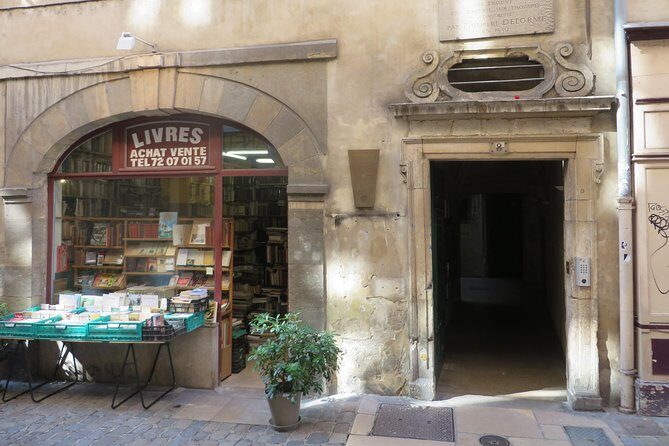
If Vieux Lyon has a party trick, it’s the traboules—those covered passageways and hidden routes that connect courtyards and buildings. This tour gives you time to experience a few of them, not just a photo and a shrug. It’s about 15 minutes here, and the pace is quick enough that you don’t get bored, but slow enough to notice details.
Why you’ll care: traboules explain how Lyon worked. They weren’t built just for aesthetics. They helped people move through dense urban blocks, shop and manage trade, and in later periods, they had practical value during conflict. You’ll also hear how these passageways became part of Lyon’s story across eras, not only the medieval one.
The practical benefit for you is confidence. Once you’ve walked a couple of these routes with the guide, you can return on your own and explore with less guesswork. They’re the kind of place you can miss if you only stroll street by street.
Tour Rose and Maison du Crible: La Tour Rose as a checkpoint
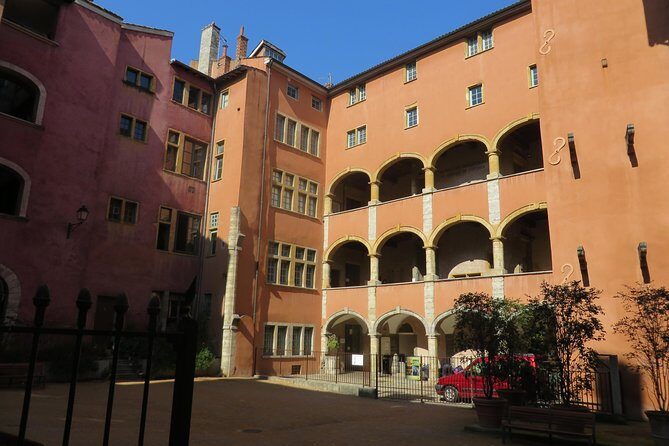
Next comes an iconic piece of Vieux Lyon architecture: the traboule “Maison du Crible – Tour Rose.” You get about 5 minutes here, which is short on purpose. The goal is to show you the key visual—La Tour Rose—and help you understand why it’s tied to the city’s working life.
In Lyon, silk wealth didn’t stay in warehouses and factories. It showed up in architecture, courtyards, and the ways buildings were connected. La Tour Rose is a visual anchor. After you see it, the rest of the traboules stop feeling random. They feel like a system.
A quick stop like this is also realistic for most schedules. You’re not forced to give up the afternoon to one building. You’re collecting snapshots—and building context as you go.
Other Vieux Lyon and Old Town walking tours in Lyon





Brochier Soieries: live silkworms and the jacquard link
The silk stop is one of the most memorable parts for a simple reason: it connects history to something tactile. At Brochier Soieries Vieux Lyon, you’ll spend about 5 minutes learning about Lyon’s weaving tradition, and during silk season you may see live silkworms.
Even if you’re not visiting during peak season, the point still lands: Lyon’s silk story is not only about old looms. It’s about technique and imagination—how designs became repeatable and scalable. The tour may include a look at a model of the jacquard loom, which helps you understand why the city became famous for its textiles.
Why this is valuable for you: silk in Lyon is often talked about in broad strokes. Here, you’re getting the human scale of it—people raising silkworms, artisans designing patterns, and machinery doing clever work. It’s the kind of stop that makes the rest of your sightseeing click, especially once you start seeing architecture and courtyards with a “trade” lens.
Theatre des Célestins: façade, square, and art tucked underneath
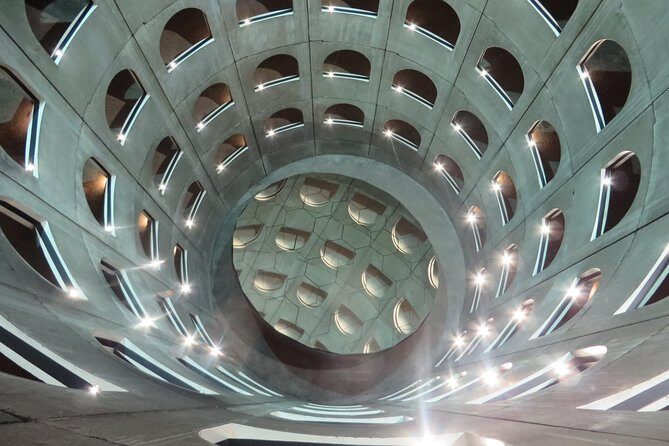
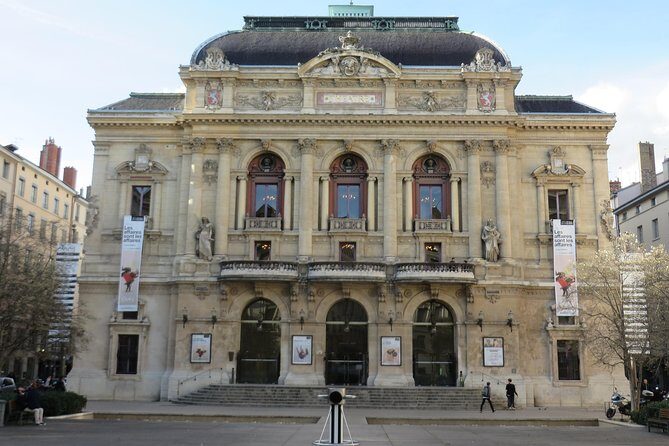
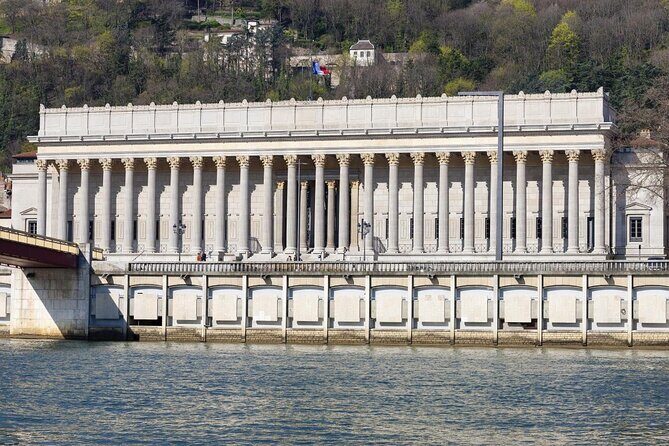
This stop is all about atmosphere and surprise. You’ll see the façade of the Theatre des Célestins and you might get a chance to go down into modern artwork hidden underneath the square. The time is about 10 minutes, so it’s a quick taste rather than a long museum session.
This works well because the theatre sits in a part of Lyon where you can feel the city’s layers. One moment you’re looking at a classic-looking façade. The next, you’re hearing that there’s modern art beneath the street-level view. That contrast is part of how Lyon stays interesting for repeat visits.
Courthouses and the trial of Klaus Barbie
Another sharp stop is the area around the courthouses of Lyon, where the trial of Klaus Barbie took place. This part of the walk is brief in the schedule, but it matters because it pulls WWII out of the textbook and into place.
This is one of the moments where a guide earns their fee. If you know the location and the name but don’t understand why it’s remembered, you miss something. Paul connects it to the broader history of how Lyon navigated danger and resistance during the war years.
It’s not an emotional “show.” It’s a clear reminder that cities store their past in official buildings too. For you, that means you’ll walk away with a more complete mental picture of Lyon, not only the postcard side.
Shopping street + Hôtel-Dieu: from old hospital to modern food and luxury
After the major landmarks, the tour shifts into the city’s everyday rhythm. You’ll pass through the main shopping street of Lyon, which helps you re-orient from monuments back to living streets. It’s a useful palate reset. You don’t want every stop to feel like a lecture.
Then comes the payoff ending: Grand Hôtel-Dieu. This is the old hospital, now transformed into a space for a shopping center, a luxury hotel, and a food court. You get about 10 minutes to visit, and the tour finishes inside this space.
For me, this ending feels smart because Hôtel-Dieu shows how cities keep their heritage while adapting to modern needs. You’re not seeing ruins. You’re seeing a working public building that has been re-used—so the history stays part of daily life, not locked away behind ropes.
If you’re hungry at the end of the tour, this is a gift. Even without booking a specific meal plan ahead, you’ll have places to eat right where you finish.
What Paul’s style does for your whole trip
Across the experiences people described, a pattern shows up: Paul is friendly, and he explains in a way that lands fast. He doesn’t just list facts. He turns the route into stories you can picture—often with humor—and he keeps things moving so the walk doesn’t drag.
Two practical notes I’d take seriously:
- He’s easy to spot, which matters when the start point has lots of people.
- His volume is built for a group, but you still need to stand where you can hear him best, since there’s no audio system.
Also, the rain angle came up more than once. On a wet day, you’ll appreciate that Paul seems to know where people can shelter while keeping the tour explanations going.
Timing, pacing, and how to set yourself up for photos
This is a short walk with multiple quick stops. That means you’ll want to think of it as a “course correction” for your Lyon trip, not a deep museum day.
To get the most out of it:
- Wear shoes you trust for cobblestones and tight corners.
- Keep your phone ready, but don’t let it slow you down in the narrow traboule sections.
- If you care about photos of facades, try to angle toward open space during the stop so you’re not fighting for a spot at the last second.
And if sound matters, position yourself. No headsets means the front and middle are your best bets.
Who should book this Vieux Lyon walking tour
This tour is a strong fit if you want:
- a fast introduction to Vieux Lyon that connects monuments to why Lyon matters
- secret passageways (traboules) plus silk-and-food themes in one compact route
- a guide who gives practical advice for the rest of your day
It’s also a good choice if you’re traveling with limited time in the city. Two hours is enough to build context, and it leaves you free to explore farther after.
If you hate walking or you need very long museum time, this may feel too stop-and-go. But for most people who can handle short transitions between sights, it’s a great way to start.
Should you book? My take on the decision
I’d book this, especially early in your Lyon stay. The value is strong because the price is low for a guided route that includes entry fees and hits several major “Lyon identity” themes: silk, food culture, and real WWII reminders.
Two things to keep in mind before you go:
- Sound can be an issue without audio headsets, so choose your spot and plan to be a step closer to the guide.
- Entrance access can vary by day, particularly for places with opening-hour rules. The tour is designed around short stops, so you’ll still get plenty even if one interior isn’t available.
If you’re the type who likes a city to come alive through stories, and you want a walk you can build the rest of your trip on, this one is worth your morning.
FAQ
How long is the Vieux Lyon Cultural & Historical walking tour?
It runs for about 2 hours.
What does it cost?
The listed price is $6.05 per person.
Is the tour in English?
Yes, it’s offered in English.
Where does the tour start and end?
It starts at Place Saint-Jean (10:00 am) and ends at Place de l’Hôpital, finishing inside Hôtel-Dieu.
What’s included in the price?
All fees and taxes are included.
Is pick-up included?
No, pick-up is not included.
Are there any entry tickets I need to buy separately?
The tour includes admission where it’s noted, and some stops involve free areas (like the museum courtyard). You won’t need to buy separate tickets for the included parts.
Is there free cancellation?
Yes. You can cancel for a full refund up to 24 hours in advance of the experience’s start time.