REVIEW · LYON
Lyon: VR Experience “L’Horizon de Khéops”
Book on GetYourGuide →Operated by Eclipso Paris · Bookable on GetYourGuide
Giza in your living room headset.
That is the magic trick of L’Horizon de Khéops, a VR adventure in Lyon where you get to roam freely for 45 minutes in a 1,000m2 space, then watch the story shift from sunrise to nightfall. I like that it is both entertaining and educational, and that you visit parts of the experience that feel closed to normal touring—without needing a plane ticket.
What I love most is the sense of movement. You are not just sitting there clicking through video; you can actually move around during the VR session, which makes the pyramids and Sphinx feel less like screens and more like a place you are in. I also really liked the storytelling structure, starting with the Giza Necropolis at sunrise, then ending with a VIP-feeling moment at the foot of the Pyramid of Giza.
One consideration: it is not for everyone. If you have heart issues or epilepsy, the experience is listed as not suitable, and VR can be a lot for small kids too (it is not suitable for children under 8).
In This Review
- Key things that make L’Horizon de Khéops worth your time
- Lyon VR at a glance: what you’re really buying
- From sunrise over Giza to the Sphinx: the story inside your headset
- How that 1,000m2 free-roam space changes the whole feel
- Mastabas, tomb silhouettes, and why this isn’t only about pyramids
- The VIP nightfall moment at the foot of the Pyramid of Giza
- Languages, hosts, and the comfort level you can expect
- Health and age rules: who should go, who should skip
- Making the most of your 2-hour slot
- Price and value: why $34 can make sense in Lyon
- Should you book L’Horizon de Khéops in Lyon?
- FAQ
- How long is L’Horizon de Khéops in Lyon?
- What is the VR session area like?
- How much does it cost?
- What languages are available?
- Is the experience wheelchair accessible?
- Is it suitable for children?
- Is it safe for people with health conditions?
- What does the experience include?
Key things that make L’Horizon de Khéops worth your time
- 1,000m2 free-roam VR space for a more physical, less sit-and-watch feel
- Sunrise to nightfall pacing that changes the mood instead of replaying the same view
- Giza Necropolis focus with tomb silhouettes of mastabas, not just the famous pyramids
- A VIP night visit moment that taps the idea of places being closed to the public
- French and English support from a host/greeter during the experience
Lyon VR at a glance: what you’re really buying
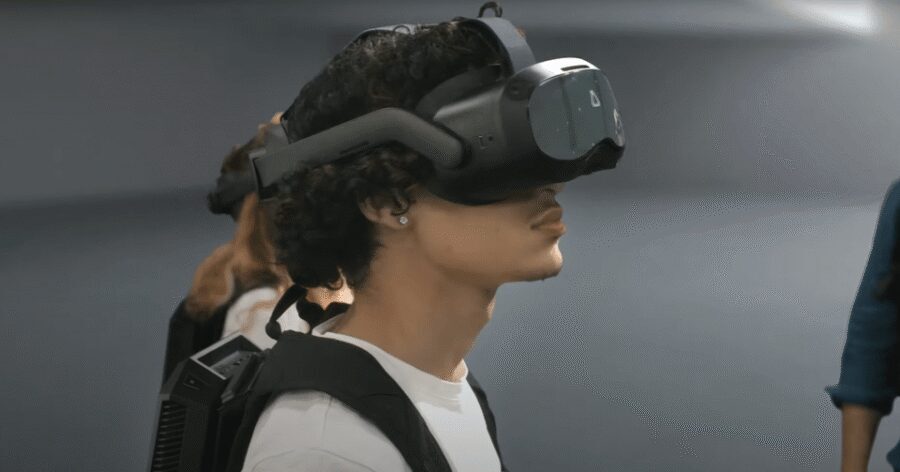
L’Horizon de Khéops is a VR experience in Lyon, in the Auvergne-Rhône-Alpes region, priced at $34 per person. The full time slot is 2 hours, but the actual headset time is 45 minutes, so you’re not committing to hours of screen time.
You’ll get a virtual reality headset and a guided experience with a virtual guide, plus help from a host/greeter in French or English. It is also listed as wheelchair accessible, which matters if you want a tech-based activity that doesn’t automatically exclude you.
The practical tradeoff is VR rules. You should plan on following instructions and staying mindful of your health. The experience is not suitable for people with epilepsy or heart problems, and it is not recommended for children under 8.
Other Lyon city card and attraction tickets in Lyon



From sunrise over Giza to the Sphinx: the story inside your headset
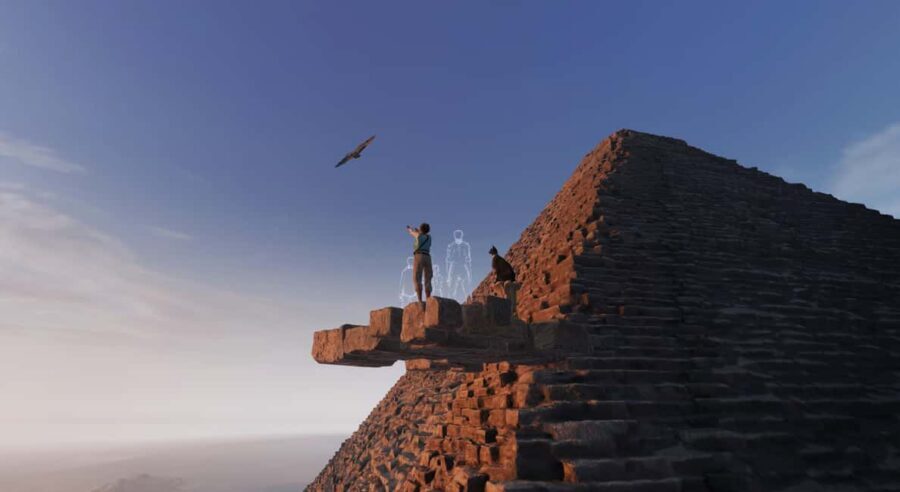
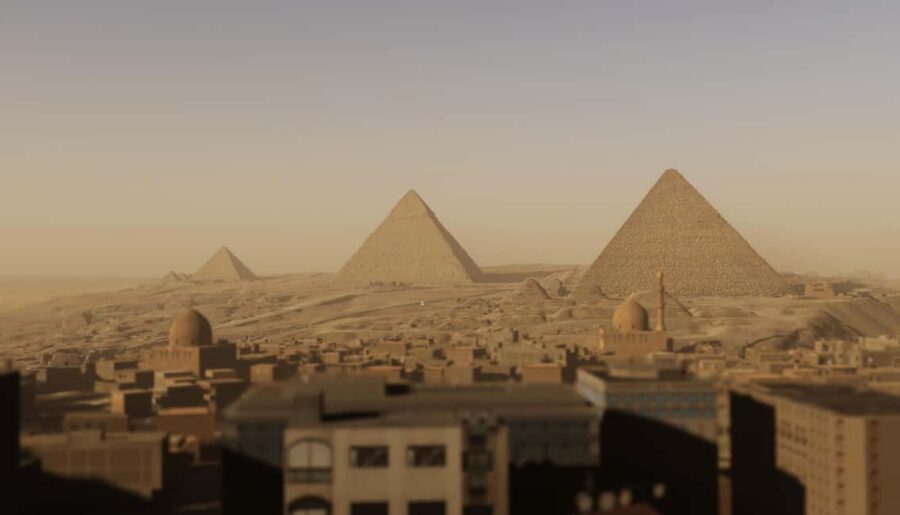
The adventure opens as the sun rises over the Giza Necropolis, the Egyptian site known for the three Great Pyramids. From there, you see silhouettes of mastabas, tombs connected to deceased monarchs’ inner circles and families. That detail gives the experience more texture than a simple greatest-hits tour.
Then you shift into a role that feels immediate: you start as a giant avatar walking across the eternal sand of the Giza Plateau. You make your way to the Sphinx, which is a strong choice because it anchors your sense of scale. After that, the experience moves you toward the foot of the Pyramid of Giza for what the program frames as a VIP visit when the timing turns toward nightfall.
Why this matters: the sunrise-to-nightfall structure helps you notice changes in atmosphere and time. Even if you’ve seen photos of Giza a hundred times, this kind of time shift makes it easier to remember what you saw, instead of it all blending into one long highlight reel.
How that 1,000m2 free-roam space changes the whole feel
A lot of VR experiences are basically “watch and flinch.” This one is different because you can move freely for 45 minutes in a 1,000m2 area. That space isn’t just for comfort—it changes the way you interact with what’s happening in your headset.
If you like hands-on experiences, you’ll probably enjoy the physical element. You get to pace the story instead of waiting for it to happen to you. You also get a better sense of scale while you are moving, because your body is involved in the experience, not just your eyes.
The drawback to keep in mind is simple: you need room, and you need to be steady. VR can make people overconfident about their motion. Go in ready to follow directions and keep your movements controlled.
Mastabas, tomb silhouettes, and why this isn’t only about pyramids
It would be easy for a VR show to focus only on pyramids and call it a day. This one adds mastabas—tomb structures tied to people close to deceased monarchs—so you see the necropolis as a fuller burial landscape, not just a background.
That choice makes the experience feel more grounded. When you understand that there are different tomb types and social roles implied in the necropolis, the Great Pyramids stop being isolated icons. Instead, they look like part of a bigger system where families and power networks were memorialized in stone.
You also get a guided narrative through a virtual guide. I like that approach because it gives you context while you’re looking around. Without it, VR can turn into “I saw a thing” without “I understood what I saw.”
The VIP nightfall moment at the foot of the Pyramid of Giza
One of the strongest promises here is the idea of discovering spaces previously closed to the public. In this VR version, the payoff comes as the timeline reaches nightfall and you end up at the foot of the Pyramid of Giza.
Even without real-world access, the night setting does a lot for your perception. Nightfall shifts attention: shapes get sharper, the scene feels more focused, and the mood turns from postcard-bright to dramatic and story-like. It’s the kind of ending that makes people remember the last few minutes instead of forgetting it as soon as they remove the headset.
It also helps that you’re ending at a meaningful location. Coming from the Sphinx path and then arriving at the pyramid’s base gives the story a natural arc: explore, landmark, then close in on the centerpiece.






Languages, hosts, and the comfort level you can expect
The host/greeter support is listed in French and English, which is good if you don’t want to fumble through instructions. The experience itself uses a virtual guide, so language support is likely handled for you while you’re in the action.
VR clarity is important, but the data here doesn’t spell out things like audio levels or subtitles. So here’s my practical advice: if you’re sensitive to audio or screen effects, tell the host when you arrive. You’ll get the best chance of a smooth headset session.
Also, since the experience is wheelchair accessible, it’s worth considering how you personally want to participate. The program says you can move freely in the VR area, so you’ll want to confirm what that means for your setup so you can enjoy it without feeling rushed or awkward.
Health and age rules: who should go, who should skip
This is where you should read the fine print and take it seriously. The experience is not suitable for:
- People with heart problems
- People with epilepsy
- Children under 8 years
I appreciate when a VR provider lists these clearly. It’s safer for you, and it helps you avoid the disappointment of not being able to participate after you’ve arrived.
If you fit the requirements, VR can be a fun way to experience a major historical site without the long-haul trip. If you don’t fit them, it’s still okay to admire the idea from afar—VR isn’t worth the risk.
Making the most of your 2-hour slot
You book a 2-hour time window, but the headset experience is 45 minutes. That means you’ll likely spend the rest of the time on setup, guidance, and getting settled before and after.
My best advice is to treat the day like you’re doing a short activity with a real start time, not a casual drop-in. Show up with enough time to get instructions, and plan to stay present during the experience. With a story-driven VR format, you’ll get more out of it if you don’t split your attention.
Another practical point: because the VR area is large, the session is likely structured. Plan to follow staff cues rather than trying to improvise your route.
Price and value: why $34 can make sense in Lyon
At $34 per person, this is priced for a mid-range experience—often in the same ballpark as a major museum ticket plus a guided activity. The value comes from two things you don’t get when you just walk around a normal site:
1) Time shifting (sunrise to nightfall)
2) A role-based viewpoint (starting as a giant avatar and moving through the site)
You’re paying for a guided, technology-driven story that focuses on recognizable landmarks (the Sphinx and Great Pyramids area) while adding supporting details (mastabas and necropolis context). If you’re visiting Lyon and you want something different from streets and galleries, this is a creative, time-efficient option.
And if you’re traveling with limited time, the math is appealing: a full 2-hour window with 45 minutes of VR means you can still pack the rest of your day with other Lyon highlights.
Should you book L’Horizon de Khéops in Lyon?
I’d book it if you want a history-meets-tech experience that is structured and easy to understand. The sunrise-to-nightfall storyline and the focus on the Giza Necropolis make it more than a simple visuals show, and the 1,000m2 free-roam design is the kind of feature you’ll actually feel while you’re doing it.
I wouldn’t book it if VR doesn’t sit well with you or if you’re in any of the not-suitable categories listed (heart problems, epilepsy, or kids under 8). And if you’re the type who hates instructions or dislikes anything that involves wearing a headset for 45 minutes, you may find it more stressful than fun.
If you’re on the fence, consider this: for $34, you get a guided, dramatic walk through one of the world’s most famous sites—without dealing with jet lag or long-distance travel. That trade can be worth it.
FAQ
How long is L’Horizon de Khéops in Lyon?
The total experience time is listed as 2 hours, with a 45-minute virtual reality session.
What is the VR session area like?
You can move freely for 45 minutes in a 1,000m2 space during the virtual reality experience.
How much does it cost?
The price is listed as $34 per person.
What languages are available?
The host or greeter support is listed in French and English.
Is the experience wheelchair accessible?
Yes, it is listed as wheelchair accessible.
Is it suitable for children?
It is listed as not suitable for children under 8 years old.
Is it safe for people with health conditions?
It is listed as not suitable for people with heart problems and not suitable for people with epilepsy.
What does the experience include?
It includes the virtual reality experience with a headset and the 45-minute session length.