REVIEW · LYON
Lyon: Musée Soieries Brochier guided tour in French
Book on GetYourGuide →Operated by BROCHIER SOIERIES · Bookable on GetYourGuide
Silk in Lyon has a science side. This 1-hour French guided tour brings 130 years of Brochier soieries to life inside the Grand Hôtel-Dieu, with couture gowns, artist collaborations, and real technical innovation. I especially like how it links famous names in fashion to the specific fabrics made by the house, and how the story keeps moving forward instead of getting stuck in old photographs.
One thing to consider: the tour is in French, and the experience is short—great if you want a focused hit, less ideal if you’re hoping for a long, self-paced museum stroll.
In This Review
- Key highlights you should care about
- Musée Soieries Brochier in Lyon: 130 years of silk with a future-facing twist
- Meeting at the Rhône: where the guided tour actually starts
- Grand Hôtel-Dieu setting: why the location adds weight to the silk story
- Inside the museum: how a 130-year company story is paced in 1 hour
- Haute couture fabrics: Givenchy, Christian Lacroix, Valentino, Yves Saint Laurent
- Artist textiles: Miró, Calder, and Cocteau on silk
- Jacquard to technical fabrics: Concord, rainforest canopy rafts, and Venus probes
- Fabrics of the future: optical fibres woven into silk thread
- What to buy at the Brochier shop: Fabriqué à Lyon silk squares and velvet
- Price and value: $14 for a guided silk story in French
- Who should book this Musée Soieries Brochier tour
- Should you book this tour or pass?
- FAQ
- What is the price for the Lyon Musée Soieries Brochier guided tour?
- How long is the guided tour?
- Do I need to speak French?
- Where do I meet the guide?
- Is the group size small?
- Is the museum tour wheelchair accessible?
- Does the price include the entrance ticket?
- Can I cancel for a full refund?
- Are there different starting times?
Key highlights you should care about
- Grand Hôtel-Dieu setting: a visit that happens inside one of Lyon’s landmark spaces, right on the Rhône-side area near the Wilson bridge
- Couture gowns traced to Brochier fabrics: see pieces created with textile work tied to the famous silk house
- Artist textiles beyond fashion: designs connected to Miró, Calder, and Cocteau show silk as an artistic medium
- Technical textiles that surprise: learn how Brochier adapted the Jacquard loom for uses like Concord nose cones, rainforest canopy rafts, and Venus balloon probes
- A future-facing textile angle: silk thread woven with optical fibres gives you a forward-looking ending
Musée Soieries Brochier in Lyon: 130 years of silk with a future-facing twist
Lyon is famously tied to silk, but this museum tour does something clever: it treats silk as both a craft tradition and a technology story. You’re not just looking at pretty fabric. You’re seeing how one Lyon silk company—Brochier—kept reinventing what silk could do, generation after generation.
The headline is simple: four generations of the Brochier family starting in 1890, with nine Brochiers and hundreds of thousands of metres of silk woven and printed for high-profile haute couture names and for artists. That framing matters because it helps you understand why the museum exists. It’s not a generic textiles display; it’s the work of a specific family and company, shown as a continuous line from classic craftsmanship to modern technical needs.
And the way the tour is structured keeps your attention. It starts with the company story, then pivots into haute couture and artist commissions, and finally lands on innovation—technical fabrics and even optical fibre woven into silk thread. If you like museums that connect past and present, this one has that momentum.
Other Lyon city card and attraction tickets in Lyon

Meeting at the Rhône: where the guided tour actually starts
You meet the guide at the Musée Soieries Brochier. The key practical detail: access to the museum entrance is outside the building, on the quays of the Rhône, close to the Wilson bridge.
This is the kind of detail that saves you time. If you arrive expecting a lobby entrance like you would at many indoor museums, you’ll waste a few minutes figuring out the right spot. Use your map app and match the riverside location—pictures on the site or a quick Google Map check will help you line it up fast.
After the guided portion, the activity ends back at the meeting point. So you’re not committing to a long wandering route across the city—think of it as a guided hour in one focused place.
Grand Hôtel-Dieu setting: why the location adds weight to the silk story
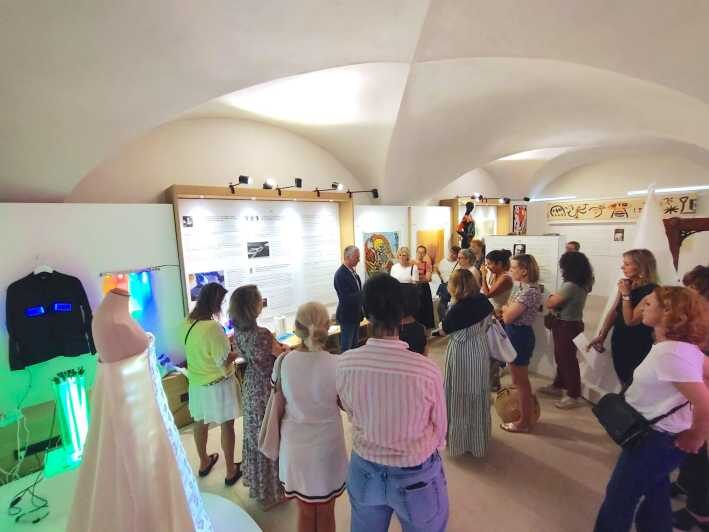
The Musée des Soieries Brochier sits within the walls of the Grand Hôtel-Dieu, and that context changes how the tour feels. The building has the kind of atmosphere that makes you slow down. Even before you learn anything, you’re in a space that signals heritage and importance.
What I like here is that the setting supports the museum’s message: Lyon’s silk tradition isn’t “just a local craft.” It’s connected to big-name fashion houses, major artists, and technical projects. Sitting in a landmark space helps the story feel grounded and official, not like a small shop exhibit.
You should also be ready for a compact, guided rhythm. The tour is small group, limited to 10 participants, so you’re more likely to get the kind of explanations that help you connect what you’re seeing to what the company did and why it mattered.
Inside the museum: how a 130-year company story is paced in 1 hour
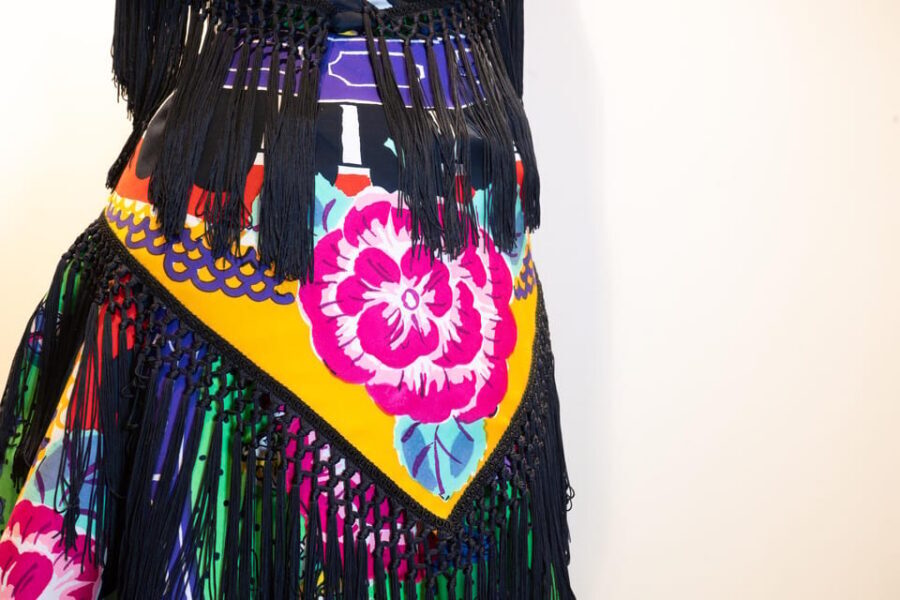
A 1-hour tour is a sprint, but it’s also a gift if you have limited time in Lyon. You don’t need to figure out the museum by yourself first. The guide helps you move through the key sections in a way that builds a narrative.
Here’s what the flow is likely to feel like based on what the museum emphasizes:
1) Brochier as a family and company
You’ll get the overview of starting in 1890 and building output over many generations. The museum highlights how large-scale weaving and printing were linked to couture and the arts.
2) Fashion fabrics made for famous houses
This is where the tour becomes visual and immediate, because you can connect the company’s textiles to the creative world using specific names tied to garments.
3) Textile designs created with artists
Then the museum shifts from runway-ready to art-driven. The point is that silk wasn’t treated as only decorative—it was treated as a medium.
4) Innovation and technical textiles
Finally, you reach the “how did they pull this off?” content: adapting the Jacquard loom, producing technical fabrics, and then moving into optical fibre futures.
Because it’s a guided tour, you’ll get context for what you’re looking at, not just a list of facts. For many people, this is the best part: you finish feeling like you understand what changed over time, not only what existed.
Haute couture fabrics: Givenchy, Christian Lacroix, Valentino, Yves Saint Laurent
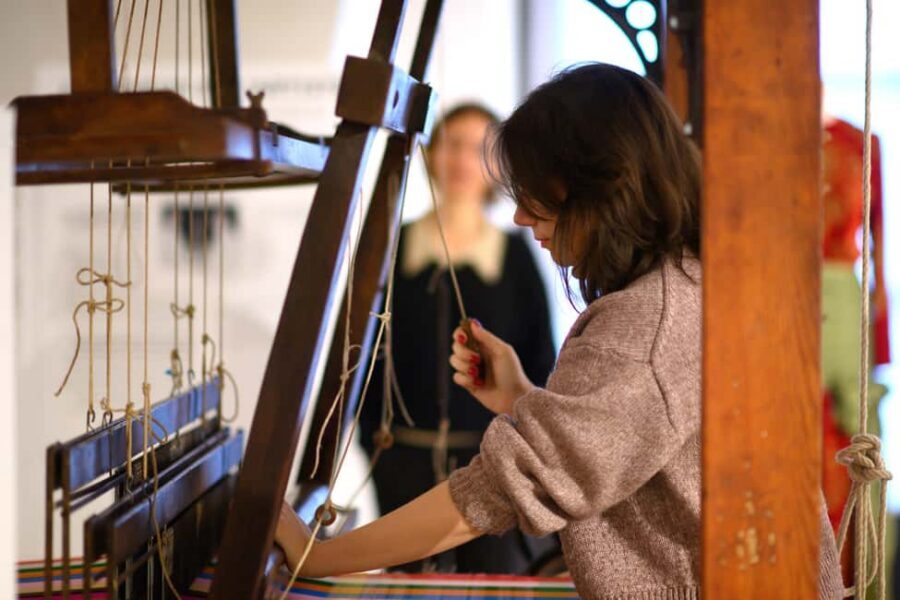
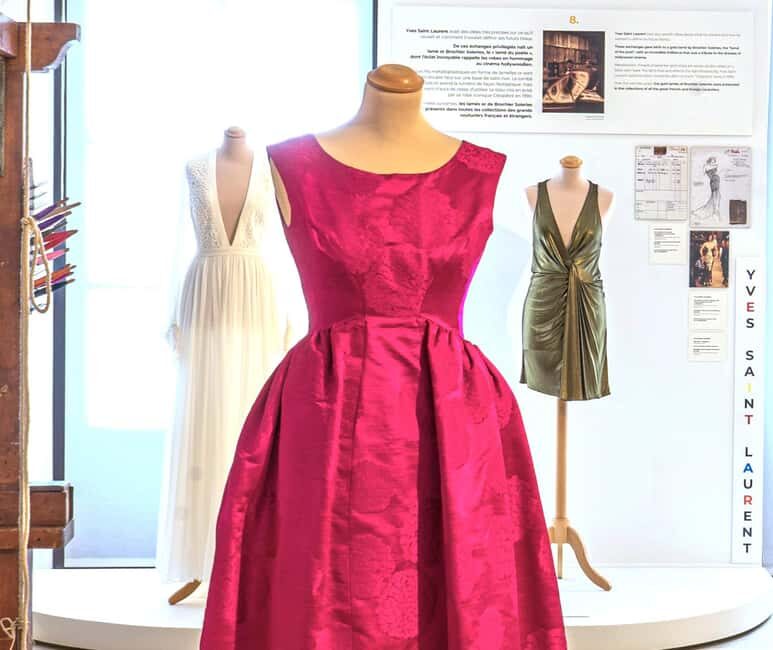
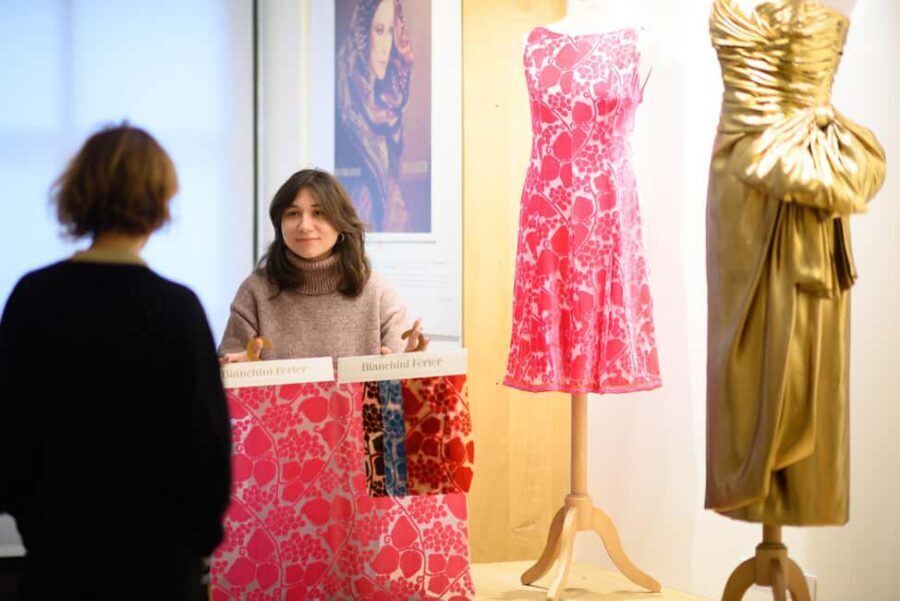
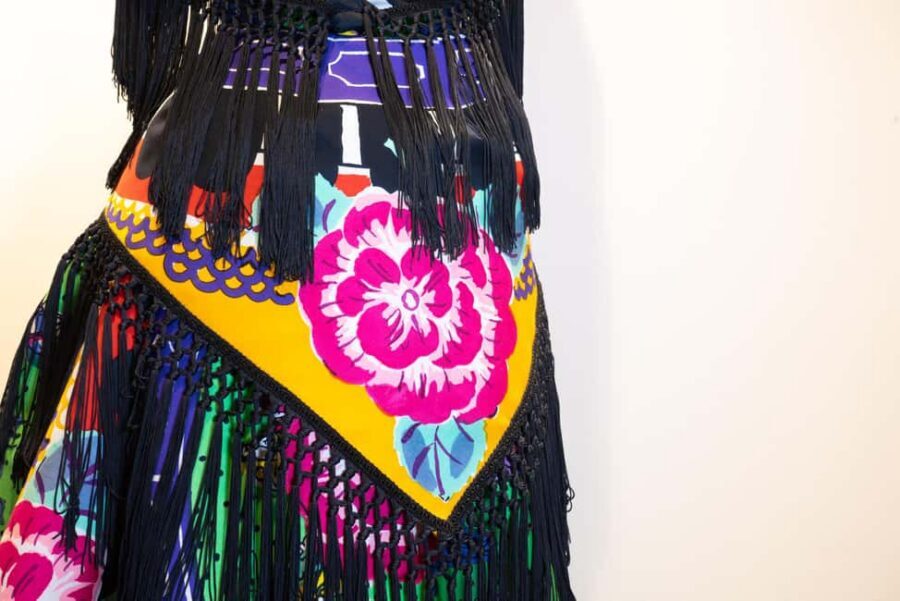
This is the section that pulls in fashion lovers fast. The museum displays dresses created with fabrics from the Brochier silk house, with names including Hubert de Givenchy, Christian Lacroix, Valentino, Yves Saint Laurent, and Nicolas Fafiotte.
What makes this more than name-dropping is the emphasis on the fabric itself. You’re not just seeing a garment as a fashion object—you’re learning to see it as a textile product, made with specific weaving and printing traditions from a Lyon manufacturer.
If you’re used to thinking of couture as something created by designers, this reframes it. Designers need materials. Materials shape what a garment can do: how it drapes, how it holds pattern, how it reflects light, and how it can be engineered for style. Seeing Brochier’s fabrics tied to those haute couture names helps you understand that fashion is also an industrial collaboration.
And yes, it’s a good photo opportunity, but don’t only focus on the surface. Spend a minute looking for what makes the textile feel different—pattern behavior, texture, and how the fabric supports the design.
Other silk museum and soieries tours in Lyon
Artist textiles: Miró, Calder, and Cocteau on silk
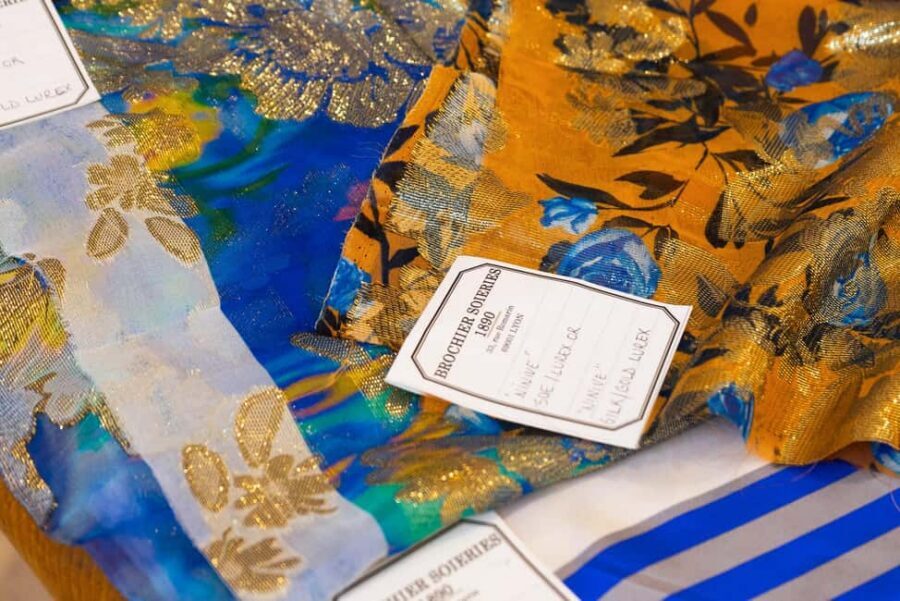
One of the most praised parts of this experience is that it doesn’t only cover fashion. It also shows how Brochier worked closely with artists, including 20th-century masters such as Miró, Calder, and Cocteau.
This matters because it expands what silk means. Silk isn’t just for formalwear; it can be a canvas for art ideas and visual experimentation. When you see textile designs connected to these artists, you can start noticing patterns and shapes as more than decoration—more like a translation of an artistic style into fabric form.
It also changes the pace of your visit. Fashion displays can feel like one conversation—style. Artist textiles open a second conversation—interpretation. The tour uses both to build a fuller picture of why Brochier’s company story is worth telling.
If you like museums that connect art history with craft history, this is a highlight.
Jacquard to technical fabrics: Concord, rainforest canopy rafts, and Venus probes
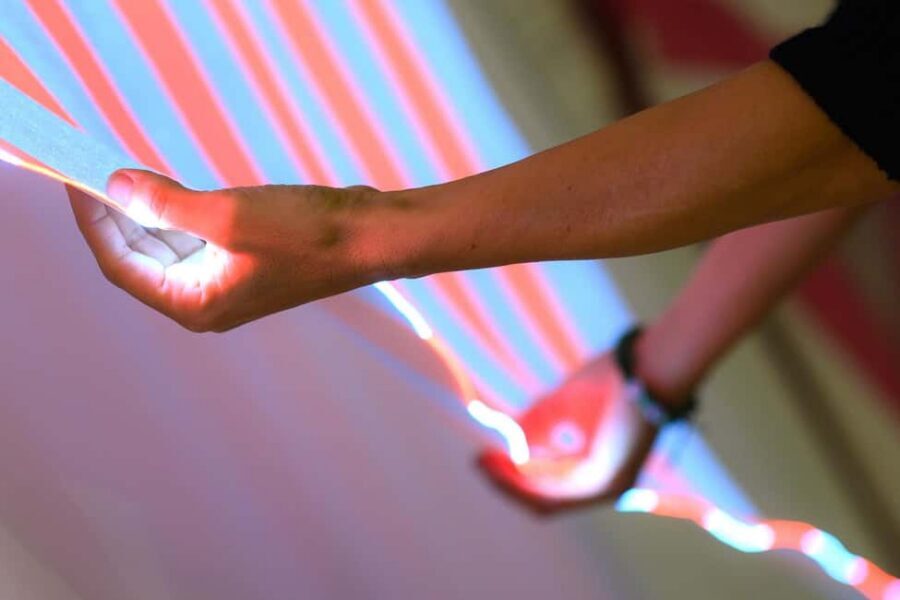
Here’s where the tour earns its reputation for being genuinely instructive. The museum explains how a thirst for innovation led Brochier to adapt the Jacquard loom for technical fabrics.
The technical fabric examples listed are eye-catching and unusually specific:
- Concord nose cones
- rainforest canopy rafts
- Venus balloon probes
Even without going deep into engineering, those examples do a lot for you. They show that textile knowledge and loom control aren’t limited to fashion. The same core skills—precise weaving, reliable production, and controlled patterns—can be used in demanding environments and advanced applications.
This is also the “wait, silk can do that?” moment. Many textile museums stay safe. This one doesn’t. It pushes past tradition and shows how manufacturing knowledge can support science and big projects.
Fabrics of the future: optical fibres woven into silk thread
The tour’s final movement is forward-looking: silk thread woven with optical fibres to produce fabrics of the future.
This is a powerful ending because it turns the whole visit into a loop: start with 1890 and multi-generation silk production, then move into haute couture and artists, then end with the idea that silk is still evolving.
You don’t need to be a tech expert to get it. The concept is simple: silk thread can act as a carrier, and optical fibres can bring new performance possibilities. It’s an elegant way to frame innovation as continuation rather than replacement.
If you like museums that leave you with questions instead of just facts, this ending does that.
What to buy at the Brochier shop: Fabriqué à Lyon silk squares and velvet
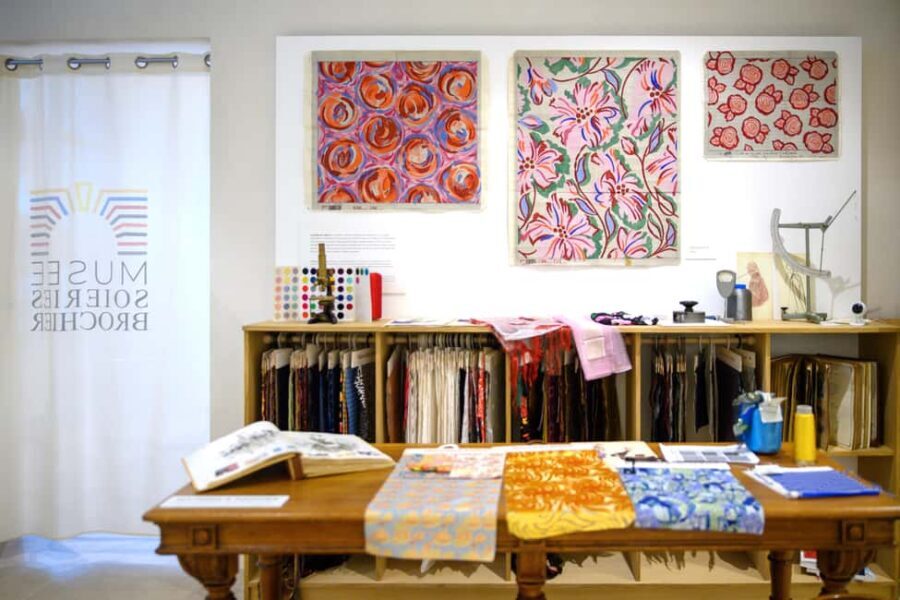
Before you leave, you have the chance to shop. The museum shop is open to the public and offers hand-painted, 100% silk and velvet squares made in Lyon in Brochier Soieries weaving mills and printing workshops.
The shop also sells silk accessories with the authentic label Fabriqué à Lyon, made in Lyon. This label is useful for you as a buyer because it reinforces origin, not just brand marketing.
What I’d choose as a practical souvenir:
- a small silk square or textile accessory you can actually use
- something that reflects the museum’s themes, like that hand-painted pattern style
This is also where the visit can feel complete. You spend an hour understanding how silk is made, then you can take home an item that was made using those same local craft processes.
Price and value: $14 for a guided silk story in French
At $14 per person for a 1-hour guided tour, this sits in the “good value if you like explanations” category. You’re paying for more than entry. You’re paying for a focused, guided thread through the company’s work across fashion, art, and technology.
A few value signals:
- It’s a small group (limited to 10), which usually means less rushing and more chances to hear the details clearly.
- It includes entrance ticket for the guided tour.
- The museum experience is designed around a narrative, not just rooms of displays.
If you’re traveling with limited time in Lyon, the short duration is actually a plus. You can fit it into a day without sacrificing a big chunk of your schedule.
The main trade-off is language: the tour is in French. If you don’t read or listen comfortably in French, you may still enjoy the visuals, but you’ll likely miss some of the “why” behind the innovation and textile details.
Who should book this Musée Soieries Brochier tour
I think this tour is a strong match if you:
- want Lyon culture beyond the usual sight list
- like fashion, but also want to understand materials and manufacturing
- enjoy art and textiles crossover work
- like science-ish stories where craftsmanship meets real-world applications
You might skip it if you:
- only want self-paced museum time
- don’t want to handle a French-language guide
- are looking for a long museum day rather than a guided hour
Should you book this tour or pass?
Book it if you want a compact, high-impact way to understand why Lyon silk matters—especially the part where it goes from haute couture to artists and then into technical textiles and optical fibre futures. The museum’s focus on one company and its changing role over time makes it more coherent than a broad textiles gallery.
If you’re in Lyon for just a short time, this price and duration are hard to beat for the amount of context you get. If you do speak French, you’ll likely get the most out of the technical and historical explanations. If you don’t, at least go for the couture and artist sections—those alone can be worth the stop.
FAQ
What is the price for the Lyon Musée Soieries Brochier guided tour?
The tour costs $14 per person.
How long is the guided tour?
The duration is 1 hour.
Do I need to speak French?
The live tour guide offers the tour in French.
Where do I meet the guide?
Meet the guide at Musée Soieries Brochier. Access to the museum is outside the building via the quays of the Rhône, close to the Wilson bridge.
Is the group size small?
Yes. It’s a small group limited to 10 participants.
Is the museum tour wheelchair accessible?
Yes, wheelchair accessibility is listed for this activity.
Does the price include the entrance ticket?
Yes. The tour includes an entrance ticket for the guided tour.
Can I cancel for a full refund?
You can cancel up to 24 hours in advance for a full refund.
Are there different starting times?
Starting times depend on availability, so you’ll want to check what’s offered when you book.