REVIEW · LYON
Silk Tour in Lyon
Book on Viator →Operated by NEW GENERATION GUIDE · Bookable on Viator
One street and a silk shop can teach you more than a museum day. This Lyon experience pairs a working Jacquard loom with hands-on looking at how artisans make and decorate velvet, plus a walk through Croix-Rousse traboules. I like that it’s designed as a tight 3-hour route with real workshop time, not just storefront photos, and I also like that you learn about the bombyx moth and how the silk process connects to the city. The one thing to consider: the walk includes going down lots of steps on the way through Croix-Rousse, so it’s not a great fit if stairs are hard for you.
For context, Lyon’s silk trade isn’t just something people mention. You’ll see the tools and the look of the materials up close, and your guide (Alex) explains why this neighborhood grew around weaving and finishing work. It’s also a private format for your group, so questions don’t get lost in the crowd.
In This Review
- Key highlights worth your time
- Why Lyon’s Silk District Still Feels Alive in 3 Hours
- Price and What You’re Actually Paying For ($270.93)
- Meeting at Place de la Croix-Rousse and Walking the Traboules
- Soierie Vivante: Watching an Original Jacquard Loom
- Brochier Soieries Vieux Lyon: Napped Velvet, Hand Painting, and Silk Worms
- La Croix-Rousse Traboules: Short Passageways, Big City-Wiring
- Alex and the Workshop-First Way This Tour Teaches
- Logistics That Actually Matter: Steps, Transit, and Timing
- Who Should Book This Silk Tour (and Who Might Skip It)
- Should You Book This Silk Tour in Lyon?
- FAQ
- How long is the Silk Tour in Lyon?
- What does the tour cost?
- Is the tour offered in English?
- Is this a private tour or shared group?
- What’s included in the price?
- What is not included?
- Where does the tour start and end?
- Is the silkworm exhibition available year-round?
- Is the tour accessible if I have trouble with stairs?
- Are service animals allowed?
Key highlights worth your time

- Jacquard loom demonstration at a Lyon weaving atelier with an original 19th-century-style setup
- Hand-painted napped velvet samples showing how decoration is done, not just sold
- Bombyx moth and silkworm exhibition that links the biology to the final fabric
- Croix-Rousse traboules passageways that change how you see the neighborhood
- A guide-led route with workshop access that feels local, not staged
- Mobile ticket and English service for an easier booking and start
Why Lyon’s Silk District Still Feels Alive in 3 Hours
Lyon is the kind of city where the past isn’t locked behind glass. On this silk tour, you walk into working craft space and come out with a sense of how the silk economy shaped streets, architecture, and daily life.
What makes the timing work is the mix of factory-style viewing plus short neighborhood wandering. You’re not waiting around for long transitions, and you’re not forced into a lecture hall tone. In about 3 hours, you get weaving, decoration, and the Croix-Rousse street maze that made moving goods practical.
Other silk museum and soieries tours in Lyon



Price and What You’re Actually Paying For ($270.93)
At $270.93 per person, this isn’t a budget add-on. But you are paying for three things that are hard to replicate on your own: workshop access, guided translation of what you’re seeing, and included admissions at two stops.
You’ll also notice the cost makes more sense if you’re traveling as a small group and want a smoother experience. The tour is private for your group, and group discounts can help depending on how the booking is structured. If you’re a solo traveler expecting just a casual walk, the price may feel steep. If you want real craft demonstrations, it starts to feel more fair.
A practical note: private transportation isn’t included. That’s common for walking-focused tours in central Lyon, but it does mean you’ll want to plan your arrival on foot or by public transit.
Meeting at Place de la Croix-Rousse and Walking the Traboules
Your day starts at Place de la Croix-Rousse, 69004 Lyon. This matters because Croix-Rousse sits above the rest of Lyon, and the tour route takes advantage of that geography.
You’ll end at 16 Rue du Bœuf in Vieux Lyon area (Brochier Soierie Saint Jean). That “downhill” structure is part of the charm, since you’ll be stepping through passageways on the way down rather than doing the same route twice.
One caution from the tour guidance is the step level. You should have moderate fitness, and you’re not recommended to join if you cannot go down many steps. If you’re trying to time your day, this is the kind of tour where comfortable shoes matter more than stylish shoes.
Soierie Vivante: Watching an Original Jacquard Loom
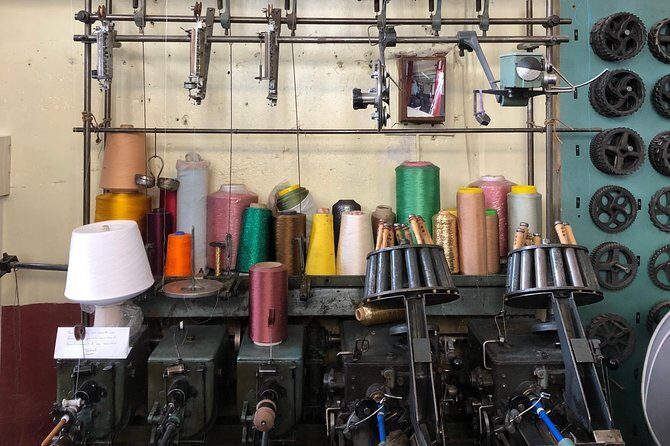
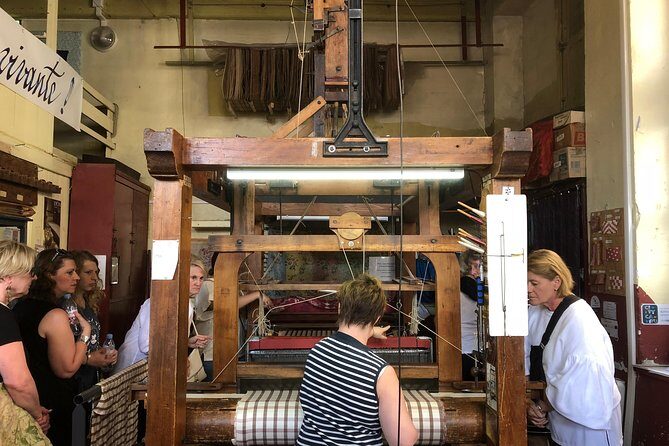
The first stop is Soierie Vivante – Atelier Municipal de Tissage, where you get a weaving demonstration on a Jacquard loom. The demo runs about 45 minutes and includes admission, so you’re getting into the room where the technique is explained and shown.
Here’s why this stop is worth it: Jacquard weaving isn’t just “fancy fabric.” It’s a turning point in how patterns are controlled, and Lyon became famous because the city treated weaving like a serious engineering-and-art craft.
You’ll also likely hear the story of how production changed over time, including how mechanization affected weaving work. In plain terms, you’ll see the shift from older production approaches to more automated pattern systems, and you’ll understand why the loom mattered to the city’s reputation.
If you’re the type of traveler who likes to see tools in action, you’ll get your money’s worth here. The loom demo is the clearest “I can’t see this at home” moment of the day.
Brochier Soieries Vieux Lyon: Napped Velvet, Hand Painting, and Silk Worms
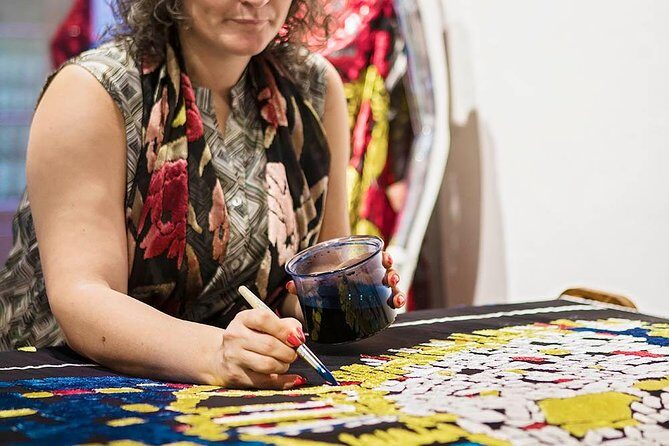
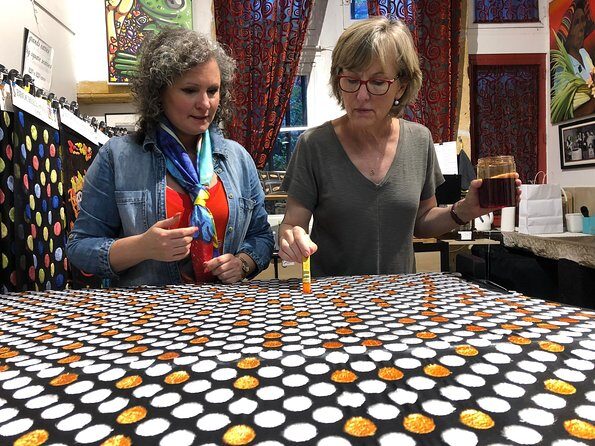
The second stop is Brochier Soieries Vieux Lyon, about 45 minutes with admission included. This is where the tour switches from weaving to decoration—specifically handmade painting on napped velvet samples.
This part is so visual that even if you don’t have a craft background, you’ll understand what “nap” means once you see how light and texture behave. The painted designs are not just printed. The whole point is how artisans work surfaces so the fabric looks different as it catches light.
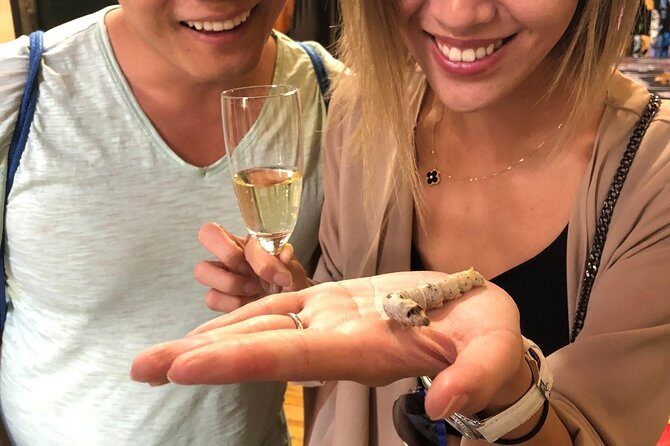
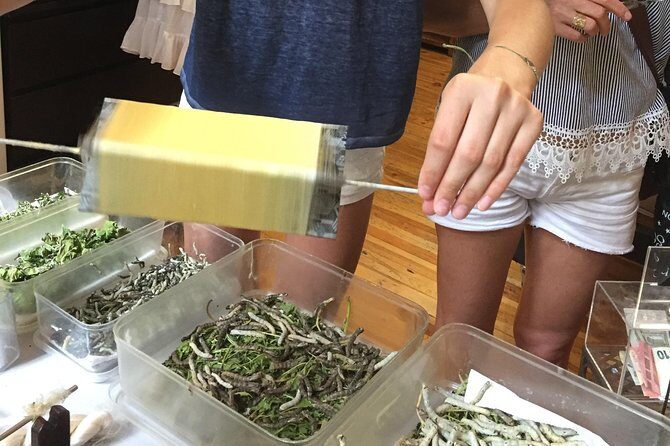
You also get an exhibition tied to the life cycle: silkworms, available from May to October, and in some cases listed as running May to November. If your travel dates fall in that season window, you’ll see the bridge between the bombyx moth biology and the final material that ends up as luxury cloth.
The best way to think about this stop is as the “how decoration becomes value” section. A loom can make structure, but the painted and finished look is what turns silk into something collectors and fashion makers chase.






La Croix-Rousse Traboules: Short Passageways, Big City-Wiring
Stop 3 focuses on La Croix-Rousse and a walk through traboules on the way down the hill. The duration listed is about 30 minutes, and admission here is free.
Traboules are one of those Lyon things that sound like a trivia word until you walk through them. These passageways connect buildings and help people move through the neighborhood more efficiently. In Croix-Rousse, that practical design connects directly to how silk work needed space, light, and movement.
This walking segment also gives you breathing room after the workshops. It’s where you can switch from “look closely at fabric” to “notice the neighborhood layout.” If you pay attention, you’ll start to see why the silk industry could cluster here: the neighborhood itself was built for work.
One more perk: the route tends to include sections that feel less like the main tourist lines. It’s not just about secret passage bragging rights. It’s about seeing how everyday architecture supports industry.
Alex and the Workshop-First Way This Tour Teaches

This tour doesn’t treat silk as a distant legend. Your guide, Alex, keeps it grounded in real process: what the tools do, what materials need, and how the city’s economy responded.
What I like about this style is that it works across different interests. If you love history, the story of canut life and silk neighborhoods makes sense. If you love craft, the loom demo and velvet painting are concrete. Even if you’re only curious, you still leave with a clear idea of the steps between moth, silkworm, fiber, weaving, and finishing.
In the workshop chat, you may also hear specific examples of how technology evolved. One theme that comes through is mechanization and pattern control, including references to punch-card style systems and the move toward more electrified production. You don’t need technical jargon to follow along. You just need to look at how the pattern is managed and how that changes speed and output.
Logistics That Actually Matter: Steps, Transit, and Timing
This is a walking-based experience, and the steep start matters. Even before you reach the first workshop, plan for the fact that you’ll be working with stairs and downhill segments.
A good move: wear shoes with traction and avoid anything that makes slipping easy. The tour notes call for moderate physical fitness and say it’s not recommended if you can’t go down many steps. If you’re unsure, think of it like this: you’ll want to be comfortable with multiple stair sets, not just a few curbs.
Public transportation is nearby, which helps if you don’t want to arrive on foot. But transportation is not included, so don’t count on someone meeting you with a ride.
Also, you’ll get a mobile ticket, and confirmation is provided at booking time. That cuts down stress, especially if you’re juggling multiple tours in one day.
Who Should Book This Silk Tour (and Who Might Skip It)
I think this is best for people who want craft details tied to city life. If you enjoy watching skilled work, you’ll probably light up at the loom demo and the velvet painting.
It’s also a strong choice if you’re a first-time Lyon visitor who wants an efficient way to understand the city’s silk identity. The mix of workshop access and traboules helps you connect the dots fast—how craft shaped streets and how buildings shaped industry.
This is less ideal if you want a mostly flat, easy stroll. The tour is short, but the slope and steps are part of the experience. If stairs are a no-go, pick something that avoids the Croix-Rousse descent.
If you’re traveling with kids, it can work, since the tour is interactive and visually driven. Still, make the call based on your child’s comfort with stairs and attention span.
Should You Book This Silk Tour in Lyon?
If you want silk education that feels real—tools, materials, and streets—you should book it. The value isn’t just the price on paper. It’s the access to weaving and finishing demonstrations plus the walk through traboules that make the neighborhood story make sense.
Book it especially if you’re the type who likes to see how things are made, not just hear about them. You’ll come away knowing why Lyon became a silk power and what the machinery and decoration techniques actually do.
If you can’t handle stair-heavy walking, you’ll be happier choosing another Lyon option. Otherwise, for the craft-focused traveler, this is the kind of tour that changes how you look at the city after it ends.
FAQ
How long is the Silk Tour in Lyon?
The tour lasts about 3 hours.
What does the tour cost?
The price is $270.93 per person.
Is the tour offered in English?
Yes, it’s offered in English.
Is this a private tour or shared group?
It’s a private tour/activity, and only your group participates.
What’s included in the price?
You get weaving and hand-painted napped velvet demonstrations, plus admission tickets for the first two stops. There is also a silkworm exhibition available from May to October (with one listing noting it may run until November).
What is not included?
Private transportation is not included.
Where does the tour start and end?
It starts at Place de la Croix-Rousse, 69004 Lyon, and ends at 16 Rue du Bœuf, 69005 Lyon.
Is the silkworm exhibition available year-round?
No. It’s listed as available from May to October, with another note indicating it may extend to November.
Is the tour accessible if I have trouble with stairs?
The tour notes say travelers should have moderate physical fitness and it is not recommended for people who cannot go down many steps.
Are service animals allowed?
Yes, service animals are allowed.