REVIEW · LYON
Lyon’s History and Must-Sees with a Local! (English Walking Tour)
Book on Viator →Operated by Quentin Dubourg · Bookable on Viator
Lyon has a way of stacking time on top of time. This walking tour links Roman Lugdunum, Renaissance streets, food lore, and WWII stories in about 1 hour 45 minutes.
Two things I really like: the guide, Quentin Dubourg, brings history with great energy (plus jokes), and the route is built around places you can actually visit on foot, from Cathédrale Saint-Jean-Baptiste to Place Bellecour.
One thing to consider: it’s a history-heavy, walking-focused experience, so if you’re hoping for long museum time or a deep food tasting menu, you’ll want to pair it with another plan after.
In This Review
- Key takeaways before you go
- Why Lyon’s old streets feel like a time machine
- Price and logistics: how $4.64 turns into real value
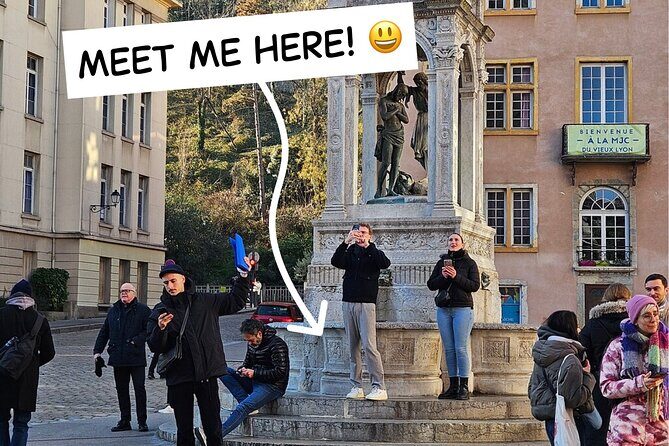
- Meeting points and timing: start strong at Place Saint-Jean
- Stop 1: Cathedrale Saint-Jean and the Roman Lugdunum story
- Stop 2: Vieux Lyon and the traboules you’ll miss on your own
- Stop 3: Rue du Bœuf and how bouchons became famous
- Stop 4: Saône views and the WWII Resistance at the Palais de Justice
- Stop 5 and 6: Place des Jacobins and the Hôtel-Dieu hospital-to-mall shift
- Stop 7: Place Bellecour and the Little Prince connection
- What Quentin’s guide style adds (and why it matters)
- Comfort and practical tips for this 1 hour 45 minute walk
- Should you book this Lyon history walking tour?
- FAQ
- How long is the Lyon history walking tour?
- How much does it cost?
- Where do I meet and where does the tour end?
- What ticket do I need?
- Do any stops require paid admission?
- Can I get a refund if my plans change?
Key takeaways before you go
- Quentin Dubourg’s style: funny, engaging, and good at tying each stop to the next.
- Traboules in Vieux Lyon: those covered passageways are the kind of Lyon detail you’d likely miss alone.
- Cathedral inside visit: the tour includes time inside Saint-Jean.
- Bouchons explained at Rue du Bœuf: you’ll connect Lyon’s eating culture to the people who popularized it.
- WWII courtroom context: the walk points you toward key Resistance history and the later trial of Klaus Barbie.
Why Lyon’s old streets feel like a time machine
This is the kind of tour that helps you look at Lyon without constantly checking your phone. You start with sacred buildings and Roman-era roots, then shift into Renaissance design, local eating culture, and WWII memory. By the end, you’re not just seeing landmarks—you’re understanding why they matter.
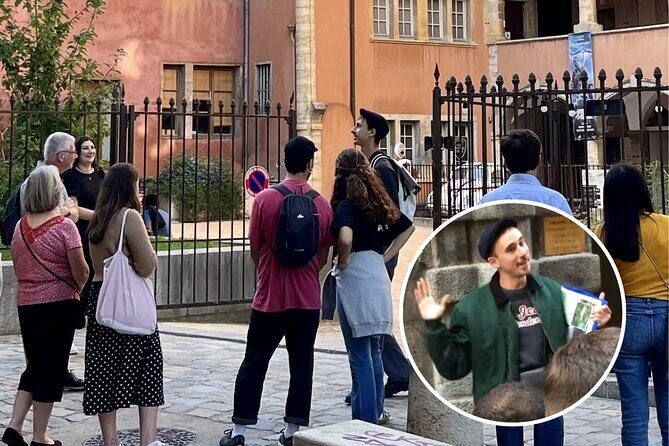
What makes it work is the pacing. The stops are close, the total time is short, and Quentin keeps moving you through the story. It’s also a small group format, capped at 20 people, which helps the guide keep the conversation going instead of turning into a lecture.
And yes, it’s in English. If you want a straightforward way to get your bearings on your first or second day, this is a smart choice.
Other Lyon walking tours with a local guide in Lyon


Price and logistics: how $4.64 turns into real value
The price is low: $4.64 per person for a 1 hour 45 minute guided walk. That alone makes it easy to justify—even if you end up taking it as a “preview” tour to guide what you do later.
Here’s why it feels like good value. The tour covers multiple major areas of central Lyon (Presqu’île as your base, with the old-town highlights and key sites in between). It also includes free admission for the stops noted as admission ticket free, including time inside Saint-Jean. So you’re not paying extra to stand in line for separate attractions.
The format is also practical: you get a mobile ticket, the start is in a central spot that’s easy to reach, and it ends near another main square where you can keep walking or find dinner fast.
Meeting points and timing: start strong at Place Saint-Jean
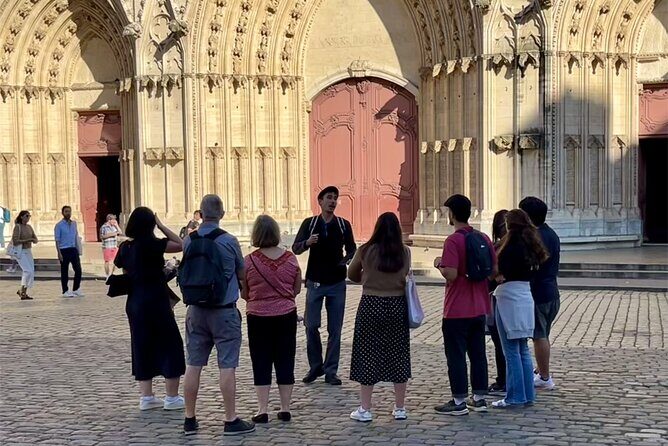
Your tour starts at Place Saint-Jean (69005 Lyon) and finishes at Place Bellecour (69002 Lyon). That matters because you’re guided from one major old-town anchor into the city center core.
The start time is 2:00 pm, which is a helpful middle-of-the-day slot. You’re not racing early morning light, and you’re less likely to arrive after the day’s main crowds have fully formed.
Also, since it ends at Place Bellecour, you’re positioned right where locals and visitors naturally regroup. That’s convenient when you want to keep the day going without extra transit.
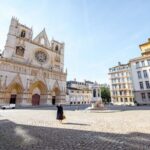
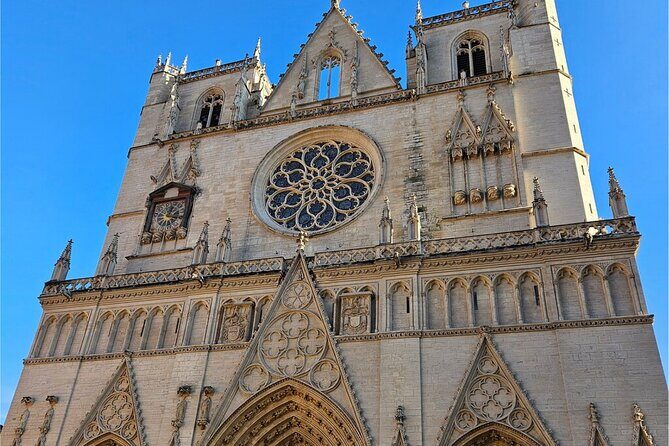
Stop 1: Cathedrale Saint-Jean and the Roman Lugdunum story
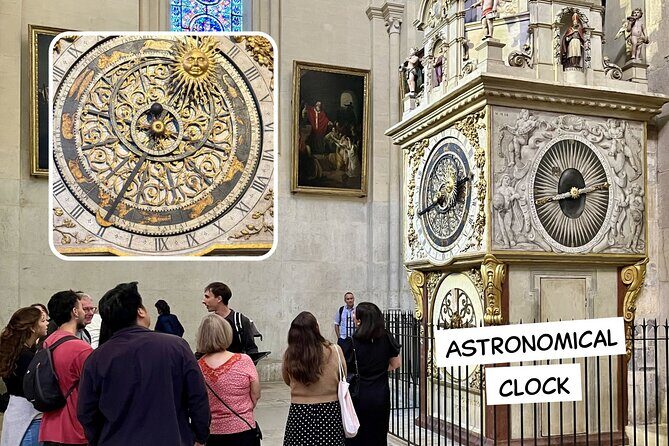
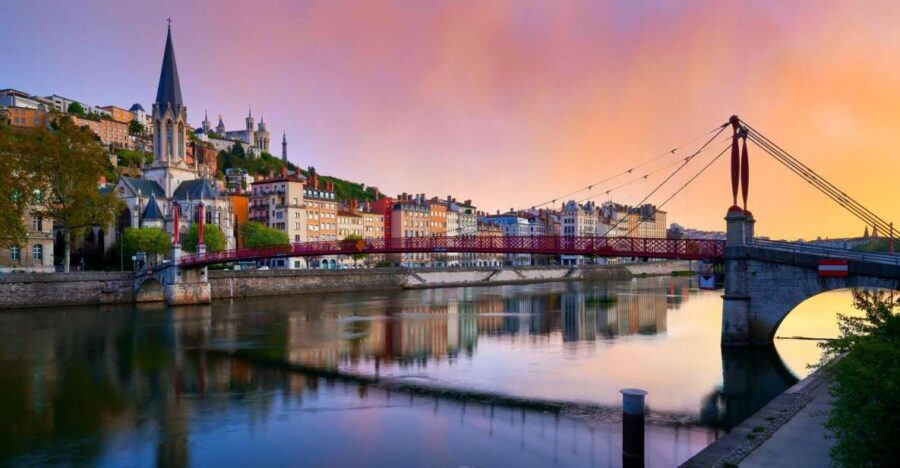
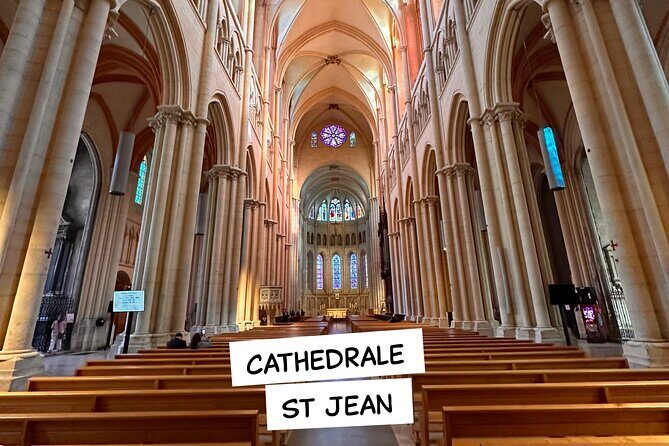
The walk begins at Cathedrale Saint-Jean-Baptiste de Lyon, and Quentin uses the building as a starting point for Lyon’s bigger origin story. The key move here is connecting the cathedral to Lyon’s older identity as Lugdunum, the Roman capital of the Gauls.
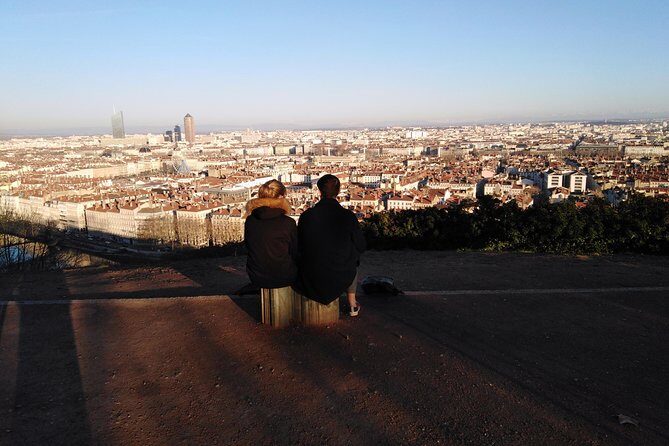
You’ll also get context about the basilica of Fourvière—placed as part of the “how Lyon developed” picture. Then you move into the cathedral itself, where the inside visit gives the history more weight than simply looking from the outside.
Why this stop works:
- It sets the timeline fast, so later Renaissance and WWII stories don’t feel random.
- You get a visual break from street-level walking because you’re actually going inside a major site.
- The admission note here is free, so there’s no surprise cost to see the inside.
If you prefer a tour that starts with architecture (then turns into human stories), this is a strong opener.
Stop 2: Vieux Lyon and the traboules you’ll miss on your own
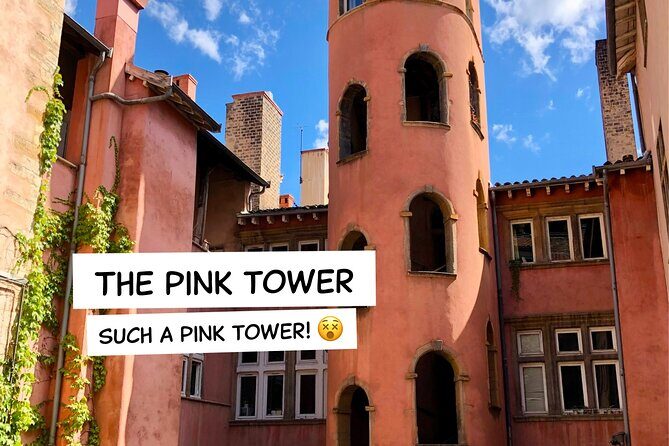
From Saint-Jean, the route shifts into Vieux Lyon, where you’ll see the old town shaped mainly during the Renaissance. Quentin doesn’t just point at pretty streets. He focuses on what you can’t easily spot alone.
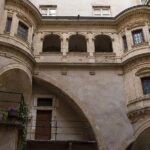
The headline feature is the passageways called traboules. These are special to Lyon—covered routes that move you through the built fabric in ways most cities don’t. Walking them changes how you understand the old neighborhood because you start noticing the connections between buildings and courtyards rather than treating each street as a dead end.
You also get “watch for this” style guidance—hidden secrets, small details, and practical explanations that make the neighborhood feel like it has rules.
Possible drawback at this stop: if you’re the type who loves slow photos and long pauses, the traboules and passageways can feel like they’re moving at a steady clip. But that’s also what keeps the whole tour efficient.
Other Lyon highlights and sightseeing tours in Lyon



Stop 3: Rue du Bœuf and how bouchons became famous
Next is Rue du Bœuf, where Quentin turns the history dial toward food culture. You’ll learn about Lyon’s culinary heritage and the background of the bouchons—the traditional dining spots that represent Lyon’s food identity.
This is more than a “food is great” detour. Quentin ties the cuisine to the people who shaped its modern reputation, including Paul Bocuse and Mère Brazier. That connection is useful because it helps you recognize that Lyon’s eating culture didn’t just happen by accident; it was promoted, protected, and turned into a signature.
What I like about this stop:
- It gives you names to look for later while you’re choosing where to eat.
- It makes the phrase gastronomic capital feel concrete instead of marketing language.
- It’s short (about 10 minutes), so it doesn’t derail a history-first itinerary.
If you’re planning your meals anyway, this stop helps you make better picks afterward—bouchons aren’t all the same, and now you’ll understand what to ask yourself when you see one.
Stop 4: Saône views and the WWII Resistance at the Palais de Justice
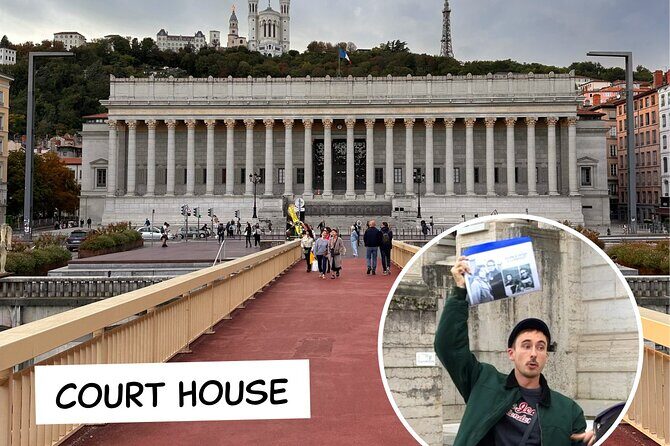
The tour then moves toward the Palais de justice historique de Lyon, with the River Saône in view as part of the setting. This stop is where the walk gets heavier, because it centers on Lyon during World War II and its role in the Resistance.
Quentin also brings in major names tied to that era:
- Jean Moulin, highlighted as a key figure of the French Resistance.
- Klaus Barbie, the chief of the Gestapo, whose later judgment is described as having taken place in this courthouse more than 30 years afterward.
Why this matters on foot:
You’re not just learning dates. You’re standing where the stories are anchored in real places. That can make WWII history feel less like a textbook topic and more like part of the city’s identity.
It’s also a useful contrast. Earlier stops covered Roman foundations and old-town design; now you see how Lyon was shaped by conflict and then remembered through institutions.
If you get emotional about WWII history, it’s worth mentally preparing for a serious shift here. Quentin keeps it clear and guided, but the theme is real.
Stop 5 and 6: Place des Jacobins and the Hôtel-Dieu hospital-to-mall shift
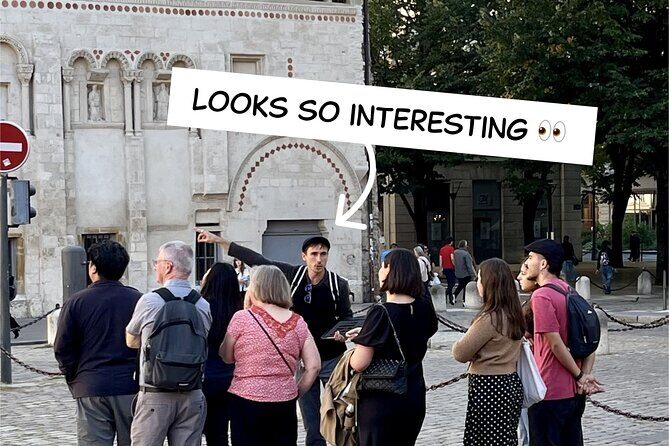
Around Place des Jacobins, the tour looks at the renovated neighborhood and the idea of Lyon’s 19th-century life for wealthy residents. Quentin uses the squares and street layout to explain what changed and how that shaped daily life.
Then the walk heads to Grand Hotel Dieu, the Hôtel-Dieu of Lyon. This is one of those Lyon stories that turns your perspective. It was a major hospital for centuries, and now the impressive building has been transformed into a mall.
That transformation is not just a “today it’s shops” fact. It’s a reminder that cities keep reusing important architecture. You see a building built for care and then repurposed for commerce, while still carrying its original scale and presence.
Why these two stops are a smart pairing:
- Place des Jacobins helps you understand the city’s “after the old town” story.
- Hôtel-Dieu gives you a human-centered landmark where the purpose of the building changed over time.
If you like when architecture tells social stories—money, public life, and health—these are worth the time.
Stop 7: Place Bellecour and the Little Prince connection
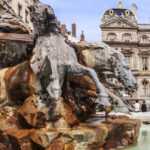
The tour ends at Place Bellecour, one of Lyon’s main squares in the city center. Quentin wraps up with the kind of local detail that makes a square feel more personal than generic.
A key final note is a statue connected to Antoine de Saint-Exupéry, the Lyonnaise author of The Little Prince. That’s a fun finish because it connects Lyon to world literature, not just European history.
You’ll like this ending if you want your last impression of the day to be light and memorable—while still tied to Lyon’s identity.
It also sets you up well for the rest of your afternoon. From Place Bellecour you can keep walking, grab coffee, or move on to dinner without needing another plan.
What Quentin’s guide style adds (and why it matters)
A good walking tour isn’t just facts. It’s how the facts are delivered.
With Quentin, the tour leans into:
- Energy and humor that keeps serious topics, like WWII, from feeling like slog.
- A storytelling pace that connects old Roman roots to later cultural and political chapters.
- A group-friendly vibe. The tour format works best when the group stays involved, and Quentin’s approach is built for that.
That combination is exactly why people tend to rate this tour so highly. It doesn’t feel like you’re being rushed through a checklist.
Comfort and practical tips for this 1 hour 45 minute walk
This is a walking tour with multiple city-center stops. You’ll do best with:
- Comfortable shoes. The route includes squares and streets, plus passageways like traboules.
- Sun and rain planning. Lyon weather can shift, and the tour runs in the afternoon.
- A light plan for food later. You’ll get food context at Rue du Bœuf, but the tour itself isn’t a sit-down meal event.
Good to know: service animals are allowed, and the tour is described as suitable for most travelers. Public transportation is nearby, which helps if you’re juggling other parts of your day.
Should you book this Lyon history walking tour?
Book it if you want a small-group, English way to understand Lyon quickly. The mix is strong: Roman origins, Renaissance old town with traboules, bouchon food culture, WWII Resistance context, then a clean finish at Place Bellecour with a Little Prince link.
Skip it (or plan something else alongside it) if you’re expecting long museum time, a full-on tasting experience, or a tour that stays strictly in one theme. This one is designed to be a high-impact overview you can build on.
FAQ
How long is the Lyon history walking tour?
It lasts about 1 hour 45 minutes.
How much does it cost?
The price is $4.64 per person.
Where do I meet and where does the tour end?
You start at Place Saint-Jean (69005 Lyon) and end at Place Bellecour (69002 Lyon).
What ticket do I need?
The tour uses a mobile ticket.
Do any stops require paid admission?
The tour notes admission ticket free for each listed stop, including time inside Cathedrale Saint-Jean-Baptiste de Lyon.
Can I get a refund if my plans change?
Yes. You can cancel up to 24 hours in advance for a full refund.