REVIEW · LYON
The Full Story of Lyon and Its Must-See With a Local
Book on Viator →Operated by Quentin Dubourg · Bookable on Viator
Secret passageways in Lyon feel like a movie set. This walking tour led by Quentin Dubourg strings together the city from Croix-Rousse down to the old center, using traboules, landmark stops, and lively storytelling about how Lyon has changed over time.
I especially like the pace. At about 1 hour 45 minutes, you cover a lot of ground without turning it into a forced march, and the route is built for cool viewpoints as you head toward the city center. I also love that it’s not just big sights: Quentin ties in themes like silk workers, dramatic worker revolts, and powerful WW2 stories, plus the idea of Lyon as France’s gastronomic capital.
One thing to consider is that Croix-Rousse is a hill. You’ll be walking down, which helps, but there are still some stairs down along the way, so comfy shoes matter.
In This Review
- Key highlights you will actually care about
- A hilltop-to-city-center route that makes Lyon click
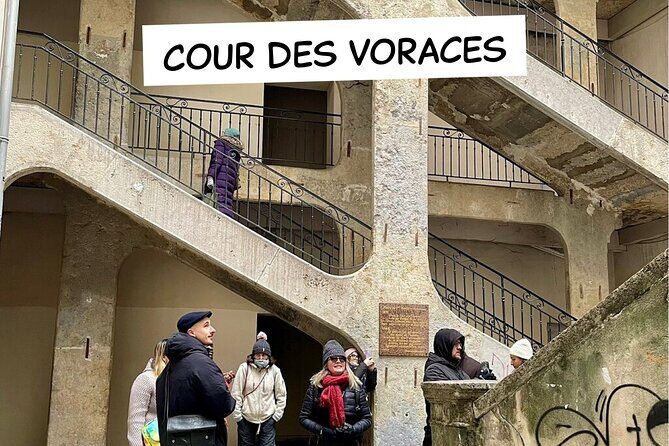
- Traboules and Cour des Voraces: Lyon’s secret city inside the city
- Why this stop is valuable for your first Lyon visit
- Place Chardonnet and the downhill to Croix-Rousse views
- Amphitheater of the Three Gauls: Lugdunum beyond the photo stops
- Montee de la Grande Cote: the fastest route down (with real atmosphere)
- Fontaine Bartholdi and the little lesson about facing the right way
- Place des Terreaux and Hôtel de Ville: where Lyon does its public business
- Fresque des Lyonnais: a mural that helps you remember names
- Hôtel Bullioud and more traboule architecture
- Place du Change and Place du Gouvernement: trade, passage, and river direction
- Price and timing: $5.93 for 1h45 across many neighborhoods
- Practical planning: what to wear and how to turn it into a great day
- Should you book this Lyon walk with Quentin?
- FAQ
- How long is the tour?
- Where does the tour start?
- Where does the tour end?
- What time does the tour begin?
- Is the admission ticket included?
- How many people are in the group?
- Is the walk hilly or does it include stairs?
- Is it near public transportation?
- Can I use a mobile ticket and are service animals allowed?
- Is there free cancellation?
Key highlights you will actually care about
- Traboules that connect Lyon’s silk past to today at places like Cour des Voraces and Hôtel Bullioud
- Croix-Rousse downhill views via Place Chardonnet and the route down Montee de la Grande Cote
- Roman-era context at the Amphitheater of the Three Gauls and what happened to Lugdunum
- Square-hopping in the best order for first-timers from Terreaux to Hôtel de Ville and back into the old town
- A food-friendly finish near Place du Gouvernement where Quentin helps you pick what to eat next
A hilltop-to-city-center route that makes Lyon click
Lyon can feel big if you only wander at random. What I like about this tour is that it gives you a logical spine: start on the Croix-Rousse side, then work your way downhill toward the city center and the river area. It’s the kind of route that helps you get your bearings fast, because every stop teaches you how the city connects.
And the guide sets the tone from the start. Quentin frames Lyon as more than postcards: you’ll hear how everyday workers shaped the city, why certain passageways mattered, and how big events left marks on neighborhoods. You’re walking, yes, but you’re also building a mental map.
The route is designed to be doable for most people. The company notes you’re walking down the hill, with only a few stairs down. Still, bring shoes you don’t mind getting slightly used.
Other Lyon walking tours with a local guide in Lyon



Traboules and Cour des Voraces: Lyon’s secret city inside the city
You begin with Traboule et Cour des Voraces, one of Lyon’s most impressive traboules. This matters because traboules aren’t just cute shortcuts; they were functional corridors used by silk workers to move fabric from areas like Croix-Rousse into the city center. That practical origin is what makes these passages so interesting.
Here’s what you should pay attention to while you’re there: how the passage works as a system. Even if you’ve never heard the term before, the guide helps you see why Lyon built these connections in the first place, and how the silk industry affected daily routes.
You’ll also get a sense of why Lyon is famous for these “in-between” spaces. If you usually skip alleyways and corridors, this stop trains you to look up, look through, and notice architecture details you’d otherwise miss.
Why this stop is valuable for your first Lyon visit
If you want one Lyon experience that feels local rather than touristy, start with traboules. They’re Lyon-specific, they explain real history, and they make the city feel like it has layers.
Place Chardonnet and the downhill to Croix-Rousse views
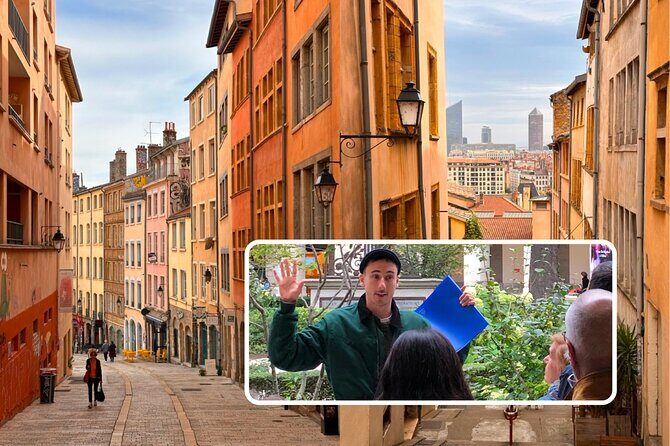
Next comes Place Chardonnet, where you learn about the downhill of Croix-Rousse. This section of the walk is where you start getting those classic city views, and it’s also where the tour transitions from “older structures” into “how the neighborhoods connect.”
Croix-Rousse is a hill, and the route is meant to take advantage of that. The company hopes you only go down, so the climb pressure is reduced. You still walk and you might hit a few steps down, so if stairs bother you, it’s smart to message Quentin in advance as suggested.
I like this part because it turns the terrain into a lesson. The slope isn’t an inconvenience here; it becomes part of how you understand Lyon’s geography and movement patterns.
Amphitheater of the Three Gauls: Lugdunum beyond the photo stops
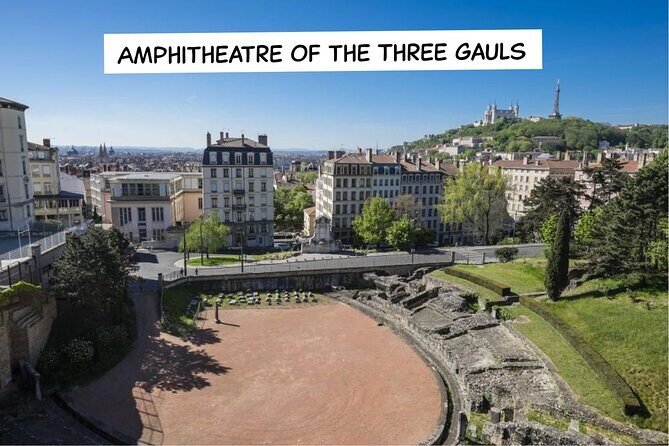
Then you step into the Amphitheater of the Three Gauls. Lyon’s Roman past often shows up in fragments on guidebooks, but this is framed as part of a story about Lugdunum: how it rose, and how it later declined.
What makes this stop work on a walking tour is context. Instead of just pointing at stones, Quentin explains how Lyon’s identity kept evolving. It’s a reminder that the “old town” feeling you get today has a long chain of causes behind it.
Also, amphitheaters are great teaching tools for non-experts. You immediately understand the scale and purpose, and you can visualize how people once gathered there.
Other Lyon highlights and sightseeing tours in Lyon






Montee de la Grande Cote: the fastest route down (with real atmosphere)
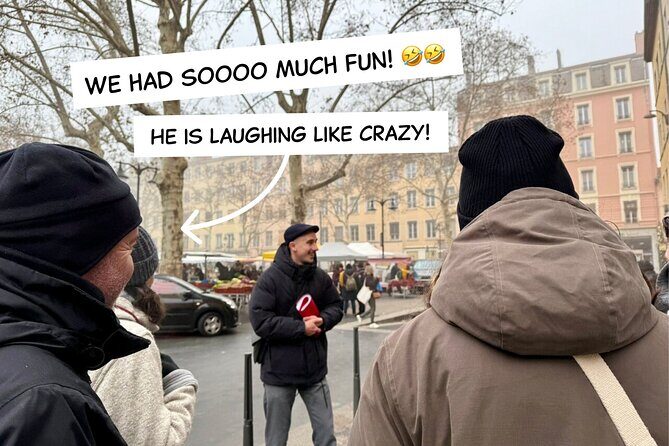
After the Roman stop, you’ll follow Montee de la Grande Cote, described as the fastest route from Croix-Rousse to the city center. This is the section where the tour feels practical. You’re walking a route that locals historically used, and you’ll notice it has a string of character: cafés and vintage shops along the way.
Even if you’re not shopping, it helps you see the difference between a “viewpoint walk” and a “life-in-the-streets” walk. This part gives you both: you’re moving quickly toward key squares, but you’re doing it through everyday storefront energy.
If you love walking tours that double as neighborhood orientation, this is a highlight.
Fontaine Bartholdi and the little lesson about facing the right way
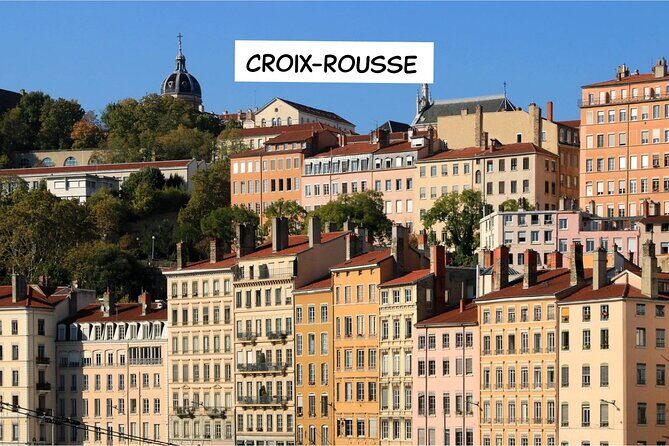
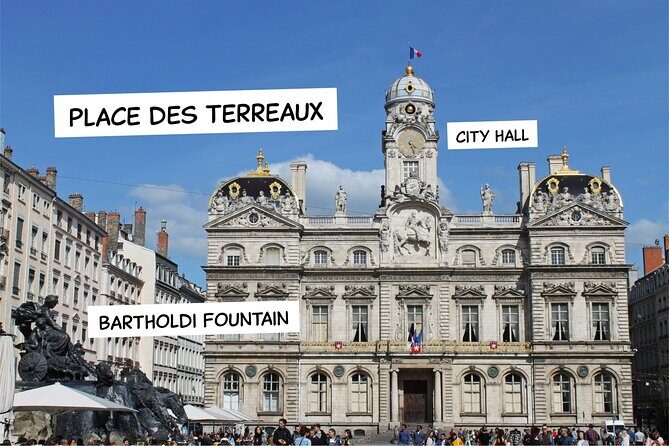
La Fontaine Bartholdi is a short stop, but it’s packed with a fun detail: the Bartholdi Fountain was meant to face the city hall. That’s exactly the kind of information you’d never catch on your own, and it changes how you look at the area.
A stop like this works because it rewards you. When you later walk around by yourself, you’ll spot orientation and relationships between monuments that you would otherwise treat like isolated objects.
It’s also a good pace reset: ten minutes that doesn’t drain you, but still gives you something memorable.
Place des Terreaux and Hôtel de Ville: where Lyon does its public business
You then arrive at Place des Terreaux, one of Lyon’s two main squares. The stop pairs the Fine Arts Museum vibe with the presence of City Hall, so you get a feel for both culture and civic power in the same pocket of space.
From there, you visit Hôtel de Ville de Lyon, Lyon’s city hall. This is where the tour becomes more about the city’s identity: how formal institutions sit inside an urban landscape that also has industrial and working-class roots.
I like that the guide doesn’t treat these as distant monuments. Quentin connects the official side of Lyon to the stories you’ve already heard about people who built the city’s economy and reputation.
Fresque des Lyonnais: a mural that helps you remember names

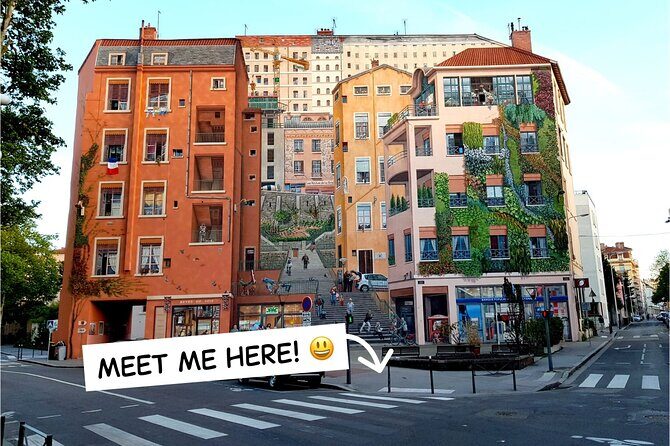
Next is Fresque des Lyonnais, a mural with famous Lyonnaise figures. This sounds simple, but it’s actually useful for your trip because it gives you a human anchor.
Instead of just learning “facts,” you start forming quick associations: names, roles, and the sense that Lyon celebrates its own. If you’re the kind of person who forgets history dates, a mural like this gives you something easier to recall when you’re back in your hotel room.
This is also one of the quieter stops, which makes it a good moment to catch your breath.
Hôtel Bullioud and more traboule architecture
Then comes Hôtel Bullioud, described as a beautiful traboule with interesting architecture. This is where you see traboules evolve from functional worker routes into something with a strong design presence.
The value here is comparison. Cour des Voraces set the stage, and Hôtel Bullioud shows another side of the same concept. Even if you’re not an architecture nerd, you can still notice the differences because the guide points your attention in useful directions.
If you want to leave Lyon feeling like you truly understood at least one local phenomenon, this is a key stop.
Place du Change and Place du Gouvernement: trade, passage, and river direction
Place du Change is a stop for exchanges in an emblematic area. It’s the kind of place name that tells you why it existed. Even without a long lecture, you can feel the logic: this was a spot for movement and meeting points in the city’s economic life.
Then you get Place du Gouvernement, described as being in the center of the old town with a beautiful trabould going to the river. This is a fitting finale for a tour that started with silk-worker corridors. It closes the loop: passageways aren’t random quirks, they’re part of how Lyon’s people moved through space toward the river.
And it sets you up well for what comes next.
Price and timing: $5.93 for 1h45 across many neighborhoods
Let’s talk value, because the price is low enough that it’s worth checking what you’re actually getting. At about $5.93 per person for roughly 1 hour 45 minutes, you’re paying for a guided route that covers multiple distinct areas and includes a mix of sightseeing and storytelling.
Here’s a practical breakdown of what that means for you:
- You get a full “first-timer orientation” sweep across hilltop to central old town.
- You hit major themed stops, not just random checkpoints.
- Admission tickets are included for stops 1 through 6, while stops 7 through 11 are free.
That ticket mix matters because it reduces the time you’d otherwise spend figuring out what requires entry. You walk, learn, and keep moving.
Group size also plays into the value. The tour has a maximum of 20 travelers, which tends to keep the experience from feeling chaotic.
Practical planning: what to wear and how to turn it into a great day
Wear comfortable walking shoes. Even though the route is mainly down from Croix-Rousse, you’ll still be on foot for the whole 1 hour 45 minutes and you may encounter a few stairs down. If you think that’s a problem, text Quentin in advance as the tour suggests.
Plan to start your day without rushing. The tour begins at 10:00 am from 9 Mnt de la Grande-Côte, 69001 Lyon. The meeting point is in the old-city zone where you can easily connect to public transportation, and the company notes it’s near transit.
Also, plan how you’ll handle your ticket. It’s listed as a mobile ticket, which is the kind of convenience that saves time on a busy day.
Should you book this Lyon walk with Quentin?
If you want an efficient, local-feeling Lyon introduction that connects major neighborhoods through the city’s signature traboules, this is a strong choice. The pacing is built for a short visit, and the story themes you’ll hear—silk workers, dramatic labor unrest, and WW2—help Lyon feel like one place instead of a checklist.
Book it if you:
- want a guided route from Croix-Rousse toward the center
- like history that explains movement and daily work
- want a tour that ends in a spot where food plans get easier
Skip it if you:
- hate stairs entirely (even a few can be an issue)
- want long museum time (this tour is a walking, story, and landmark flow)
FAQ
How long is the tour?
The duration is about 1 hour 45 minutes.
Where does the tour start?
It starts at 9 Mnt de la Grande-Côte, 69001 Lyon, France.
Where does the tour end?
It ends at Place du Gouvernement, Pl. du Gouvernement, 69005 Lyon, France, in a spot that makes it easy to continue to nearby places to eat.
What time does the tour begin?
The start time is 10:00 am.
Is the admission ticket included?
Admission tickets are included for the first stops (Traboule et Cour des Voraces, Place Chardonnet, Amphitheater of the Three Gauls, Montee De La Grande Cote, La Fontaine Bartholdi, and Place des Terreaux). Stops later in the tour are marked as admission free (Hotel de Ville de Lyon, Fresque des Lyonnais, Hôtel Bullioud, Place du Change, and Place du Gouvernement).
How many people are in the group?
The tour has a maximum of 20 travelers.
Is the walk hilly or does it include stairs?
Croix-Rousse is a hill. The route is intended to go down, so it should be easier, but there are a few stairs down. If you’re concerned, the tour suggests texting about it.
Is it near public transportation?
Yes, it’s listed as being near public transportation.
Can I use a mobile ticket and are service animals allowed?
Yes, the tour uses a mobile ticket, and service animals are allowed.
Is there free cancellation?
Yes, you can cancel for free up to 24 hours in advance of the experience start time for a full refund.
If you tell me your travel dates and how mobile you are on stairs, I can suggest the best way to pair this with the rest of your day in Lyon.